israel, my heart

You know when you carve out a Halloween pumpkin with that special spoon that has the rough edges? That’s how I feel inside right now. Utterly and completely carved out. My heart feels jagged, wounded, not smooth. Cracked into a million pieces. Gutted. Weary.

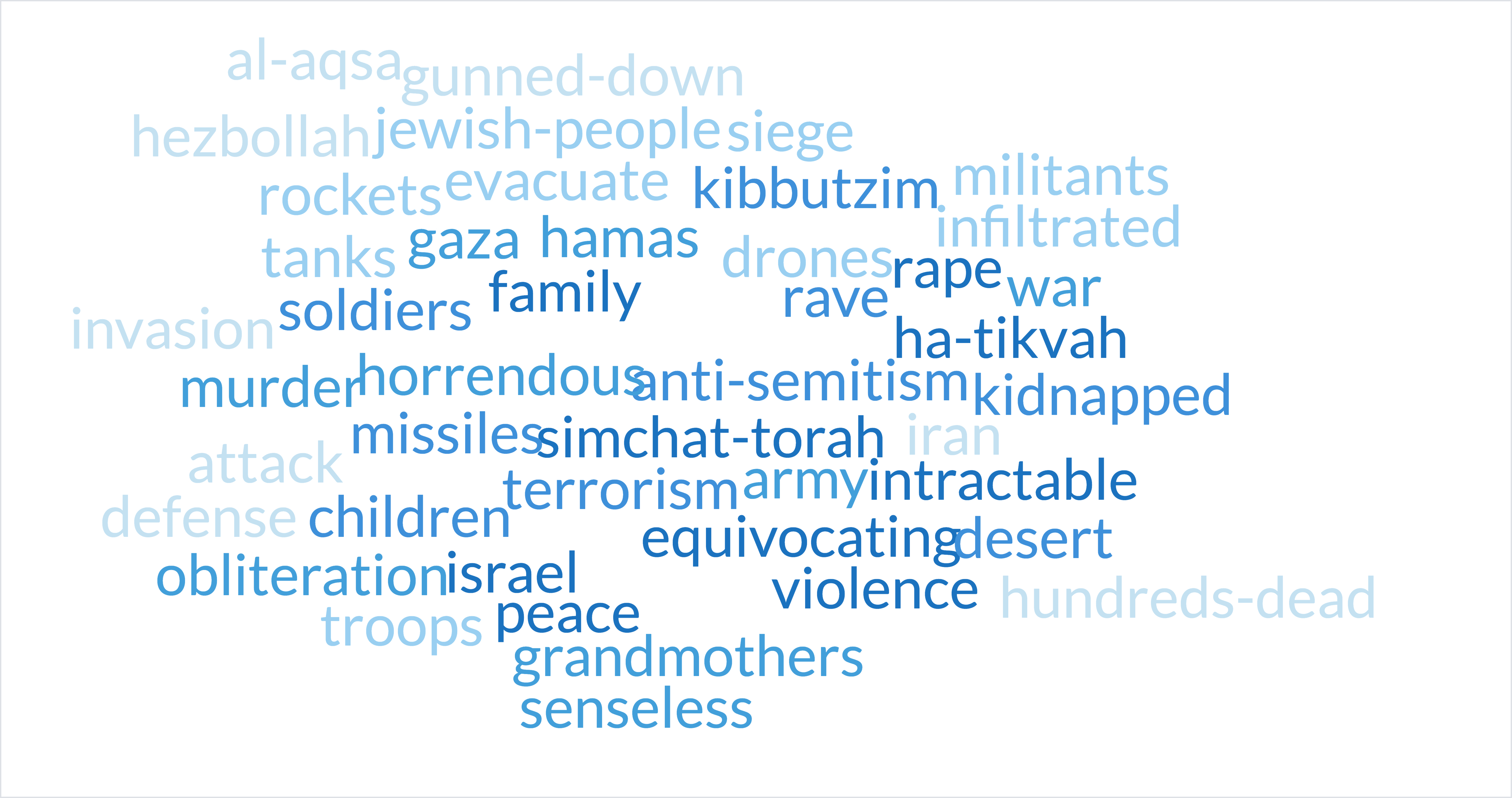
On October 9th, I made my first word cloud of the words that had been swimming around in my head since October 7th. Making word clouds felt like the most concrete thing I felt capable of doing with my thoughts, my feelings, with the headlines I was reading and what they brought up inside me. Some were entirely of sentences from the headlines. Others were things I had thought or said to or heard from people in my life. I made one word cloud with the names and ages of all of the hostages, taking the time to look at each of their photos, to look into their eyes. One word cloud focused on the suffering of the children, both Israeli and Palestinian children. God, that one hurt. All I could do was feel. And make word clouds. Sometimes only feel.
~~~~~~~

While I certainly didn’t start from zero, I have spent a lot of the past 55 days learning – filling in the gaps in my knowledge and understanding of the history of Israel, the history of the conflict between Jews and Palestinians, between Jews and Arabs, between Israel and the countries and people all around her. I have done what I can to understand the history and cultures and politics to try and make sense of what happened on October 7th and since. For me, it feels like a critical obligation, as a Jew and as a human, to understand and to stay connected.

I have really missed my father especially these past 55 days. He was the one who gave me my love for history because it was also his own love. He taught me about the long arc of history and the big picture, about nuance and the grey areas, about geopolitics, about migration and integration and being an insider and an outsider at the same time. He told me our family’s story as refugees from so many parts of the world over so many centuries since their expulsion from the Iberian Peninsula. He had a way of helping to make sense of the most confusing stories – when I was in elementary school and had to write an essay about a current event and I chose the Iran Hostage Crisis, when I was in high school and had just come back from a peace mission to the Soviet Union during the final years of the Cold War, or when I was in college trying to understand the U.S.’s role in eliminating leftist movements in Latin America. My father would add his personal experience as a citizen of the world who had lived in six countries, including Israel, and who spoke as many languages, including both Hebrew and Arabic. And he would throw in just the right amount of sentimentality, wistfulness and nostalgia, the kind you feel when you’re reading historical fiction or watching a movie about a family’s saga through time and place.

~~~~~~~

I can’t take my eyes off of the videos and photos of the hostages that have been released by Hamas and returned to Israel in the past week. The little boy named Gal who shares my name. The little girl named Alma who reminds me of photos I have of myself when I was young. The Thai and Philippino nationals leaving the hospital accompanied by song as they head to the airport to return home. Yaffa, the 85-year-old Holocaust survivor. The 13-year-old girl named Gali running with relief to hug her mother, their bodies absorbed one with the other. The brother and sister, Maya and Itay, who had both been held hostage but who were released at different times, reunited in the hospital. Mia sobbing in her mother’s arms after Mia’s release today, day 55. 4-year-old Avigail, reunited with her aunt and uncle and grandparents, the people who will raise her because her parents were murdered by Hamas on October 7th.

~~~~~~~

The city of Oakland, California, where I used to live, held a city council meeting a few days ago to decide on making a statement about the war between Israel and Hamas, as a city that “loves life.” I don’t know how many people spoke at the four-hour meeting, but I heard some of those who chose to make statements against Israel, against Jews. Those statements were disgusting, ignorant, hateful, false, lies, and/or completely absurd. The 1200+ people massacred by Hamas on October 7th were actually killed by the IDF?? Seriously? I don’t have a TikTok account and I’ve been out of college for 30 years so I don’t know if either of those spaces are where they got their information, but I shudder for the fate of humanity if this is the kind of garbage people believe so deeply that they choose to scream about it at a city council meeting. And don’t get me started on the “this is simply armed resistance by the Palestinian people” narrative. If that’s how you justify or dismiss the monstrous slaughter and kidnapping of innocent people for the sole reason that they are Jewish, then your heart is a cold, cold place and I have nothing to say to you.

~~~~~~~

A few weeks after October 7th, someone I didn’t know personally but whom I had followed on Instagram posted some social media memes essentially saying the same thing, images and words of parachuting terrorists representing armed resistance fighting white capitalism and settler colonialism, all of those simplistic, unnuanced, and antisemitic tropes that are everywhere right now. I wrote her a DM, asking her not to forget the massacre of Jews, not to ignore our generational traumas that also matter, not to completely dismiss an entire people as she supports another. She wrote me back, and her response took me time to process because it was the most vile, hateful, nasty, angry message I have ever received from anyone ever. She made all kinds of assumptions about me, about my whiteness, about my family, about Jews, about my views, about what I care about. To her, I was not a person with feelings, I was a representation of something she felt superior to, and the language she used was arrogant and abusive. I took the time to reply to her reply, thoughtfully and with vulnerability, even though what I wanted to write to her was a lot more angry and mean and filled with profanity. Afterwards, I tried to make one of those elimination poems from her words, where you black out most of the words from a paragraph and leave a few remaining words that form a poem that completely changes the energy of the original message – but I couldn’t do it. There weren’t enough gentle or even neutral words in her message to turn her hatred into love and compassion.

~~~~~~~

Since October 7th, I have unfollowed almost every Instagram account of people I had previously admired and learned from. Progressive thinkers who had resonated with the values of social justice I have stood for and worked for since my teens. Leaders in social justice spaces, racial justice spaces, gender and LGBTQ+ and reproductive justice spaces. They, like this woman I had written to, repeatedly dismissed the massacre of Jews, completely ignored any nuance or understanding of the complexity of this conflict, justified the murder and kidnapping of Jews as Palestinian resistance, threw out messages such as “Israel is responsible for what happened to them on October 7th,” thoroughly dismissed (my) Jewish existence, and shared memes as a form of their protest against Israel’s right to exist and defend her people.

My Instagram now consists of Israelis and other Jews, cute animals, a GenEx mom who makes parodies about being a GenEx mom, and potters who make ceramics that inspire my own.

~~~~~~~

The last time I was in Israel was in February of 2008. I left with my family just before Valentine’s Day, 4 months earlier than we were supposed to return home. I was pregnant with my second daughter, and we had found out a few weeks before that she had a life-threatening birth defect that would require intense care and the support of our family and friends. I was scared of what was ahead, but I was relieved to be leaving Jerusalem.

The 7 months we spent there had been hard on me. I spent 6 weeks of them in excruciating pain with shingles, and recovered just before we found out about our daughter’s condition at her ultrasound. We lived across the street from a massive construction site, and the sound of impact hammers was constant and wore through every last nerve in my body. I struggled to find my footing and purpose in the city of my birth. Where my husband was finally finding his purpose as he began rabbinical school. Where my older daughter was beginning to learn Hebrew in the most organic way at her Israeli preschool. I remember when our plane took off from Ben Gurion Airport, and I exhaled with relief in spite of the unknowns ahead.

Since February of 2008, I have often said to myself and others, “I have a complicated relationship with Israel, even though it is where I was born.” I got tired during those 7 months there of arguing with the aggressive vendors at the market who wouldn’t accept that I had brought my reusable bags and would force plastic bags on me every single time I went to buy hummus or vegetables. Why does everyone here have to be so intense and high strung? Maybe I am just way too sensitive for this place, I remember thinking time and time again. It pained me to see the separation wall between Jerusalem and the West Bank in the distance from the main street near our apartment. I cried at a Jewish Film Festival screening several years later at the end of a film about the Religious Zionist settler movement that has for years contributed to preventing a two-state solution between Israel and the Palestinian people. I have struggled along with so many Israelis who spent the 11 months before October 7th protesting against Netanyahu’s right-wing government, afraid of what Israel would look like in the future under this government in the same way I fear what the U.S. will look like if trump becomes president again.

I was born in Jerusalem. I was a toddler in Israel during the Yom Kippur War. I have a lot of family and friends who are Israeli, some of whom are fighting in Gaza right now, all of whom are so deeply impacted by October 7th and the weeks since. When I visited Israel with my father when I was 9 years old for my cousin’s wedding, I remarked to him in awe, “Everybody here looks like me!” I saw myself in their faces, in their thick unruly hair. I spent 6 weeks in Israel when I was traveling in the mid-1990s. I turned 23 there. I spent time with all of my family, with my parents’ oldest friends, people who had known me as a baby. I learned about our history, my history. I traveled all the way to the north where you can see the Golan Heights, and all the way to the south, through the Negev desert, to the beaches of Eilat. I visited Chagal’s stained glass windows of the Twelve Tribes of Israel in the chapel of the hospital where I was born. I found a painting at Yad Vashem signed by an artist who shared my grandfather’s last name, a Holocaust survivor who turned out to be a distant relative by marriage. At Yad Vashem I added the name of my mother’s half brother, a child who was murdered by the Nazis, to the hall where children’s names are recited through speakers as you see their names and faces on the walls.

~~~~~~~

~~~~~~~

I am the granddaughter of Holocaust survivors on one side and of Sephardi Mizrachi refugees on the other. My husband once told me, years before we were married, that I couldn’t not be Jewish even if I tried. He’s right. My Jewishness is in my core. It has always been in the water of my upbringing, of my sense of who I am. It’s in the food I grew up eating, in Shabbat candles lit when my mom felt like making roast chicken and rosemary potatoes in butter on a Friday night, in the transliteration of the words to Maotzur that was on the back of the box of Hanukkah candles we would get for free every year from Chabad, in the Egyptian haroset my father would make from his grandmother’s handwritten recipe. Of course I found community with other Jewish students when I began college. Where else would I find my people, my tribe, my easy and generous welcome?

the in between space

IMG_4198

When I wake up at 3:00 am nowadays, which isn’t necessarily a new thing, it’s as though I can feel all of the others who are awake with me. Our restless sleep-addled minds negotiating panicked thoughts, now-rational fears, and worries, so many worries. Trying to comprehend the unknown we are all swimming in. Trying to settle into liminality, the in-between space that follows one thing but precedes the next.

Generalized mild anxiety a constant companion, not just in the middle of the night but also in the morning before coffee. And after coffee (is the caffeine making me more anxious?), after lunch (how many English muffins is too many?), after a walk (did I keep enough distance when that jogger ran by?), after a shower, after changing from my black leggings into my grey ones, so as not to feel like a complete sloth in this bizarre new normal.

I’ve been keeping a strange kind of diary on my phone, little notes about what happened each day, including the number of confirmed Coronavirus cases (170) and COVID-19 deaths (1) in my city. Watching the progression here as I track the pandemic everywhere else.

Questions we ask each other now:

How is home schooling going? (My son prefers his real teacher, and misses learning and playing with his friends. I never once before contemplated home schooling my children. Today’s learning consisted only of watching silly Smithsonian Museum of Natural History videos on YouTube with my seven-year-old. Teachers are amazing humans.)

How many Zoom birthday celebrations have you been part of so far? (Three. I wonder if we’ll still be having birthdays over Zoom in a few months when it’s mine.)

What is one of the hardest things? (Guilt. That an autoimmune condition keeps me from being able to even go grocery shopping for my family. That I am safe in a comfortable home while there are people living on the street or in shelters, incarcerated, in ICE detention, unsafe living with their abusers, unsure where their next meal will come from, out in the world fighting for lives in hospitals, picking our food, packaging and delivering the things we need, stocking our shelves, picking up our trash, driving our buses and subways… Guilt that sitting here with my computer on my lap is the most helpful thing I can do for the world right now. I know that even this guilt is a privileged emotion, and completely unproductive, but I’m human, so it’s there.)

We are all so deeply and intricately interconnected, one shared humanity.

What has been an unexpected blessing? (Family dinners happen almost every evening now. And I love the dozens of supportive text threads I have going with my people across the country and around the world, the opportunity to send them love when I’m thinking about them, which is a lot. Also, the beauty of spring, which is unhindered by all this.)

How are you doing? (As well as can be expected under the circumstances. Moments of anxious intertwined with strange moments of zen. Thankful for a zillion comforts. Scared for my father who lives in a nursing home across the country; grateful for the amazing humans who care for him. Heartbroken for our world. Inspired by the goodness of humans.)

How about you? How are you doing?


tikva’s quilt

img_6222.jpg

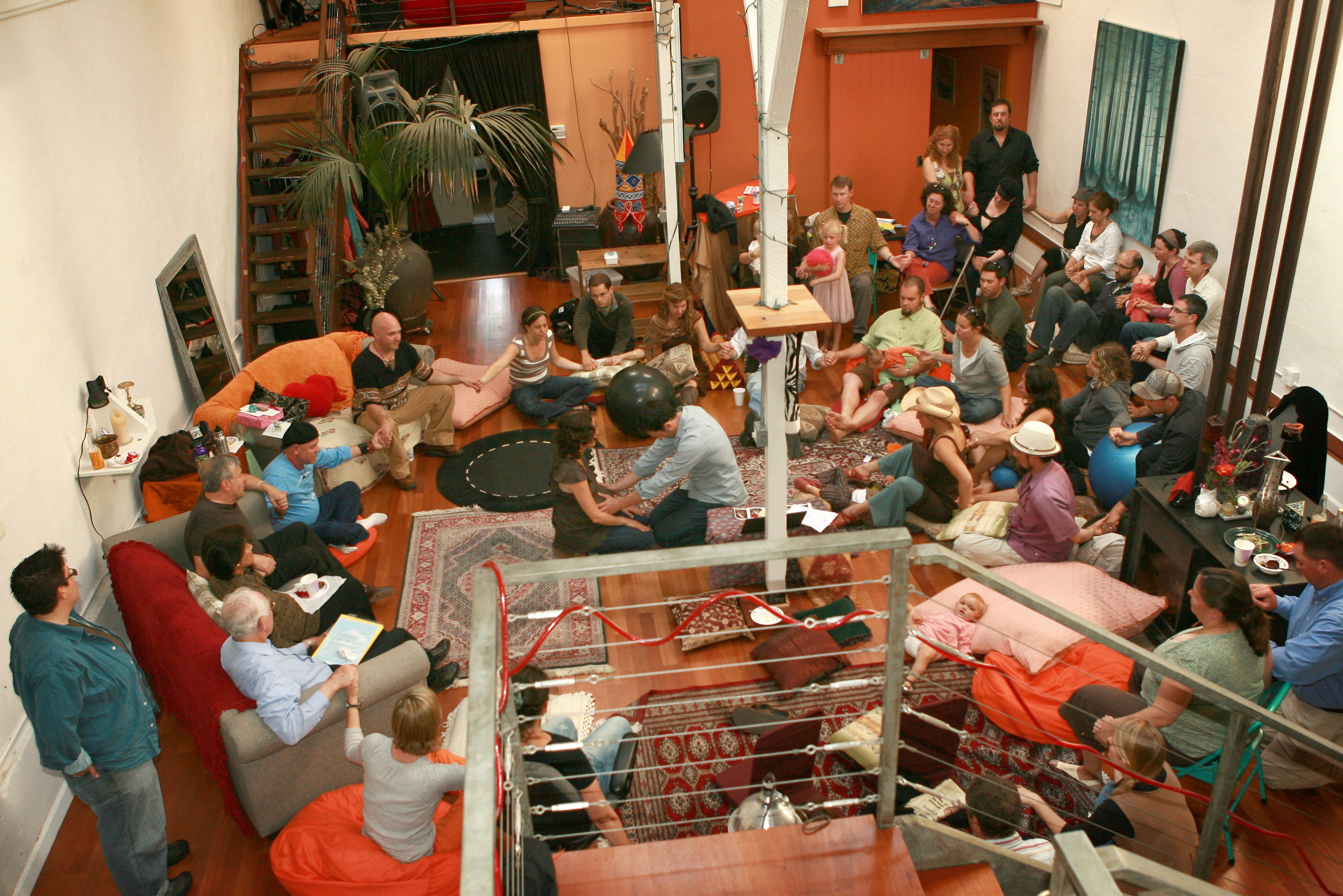
A month before Tikva was born, our community of family and friends surrounded us with the most incredible love, circling around David, Dahlia and me – and Tikva still in my belly – blessing us with everything we would need to welcome our second daughter when she was born. All together in that giant circle, they gave us the strength to take on the unknowns the future held, and the 58 days that unfolded of Tikva’s mighty life, days spent entirely in the critical bay of the intensive care nursery at UCSF.

RJH19110

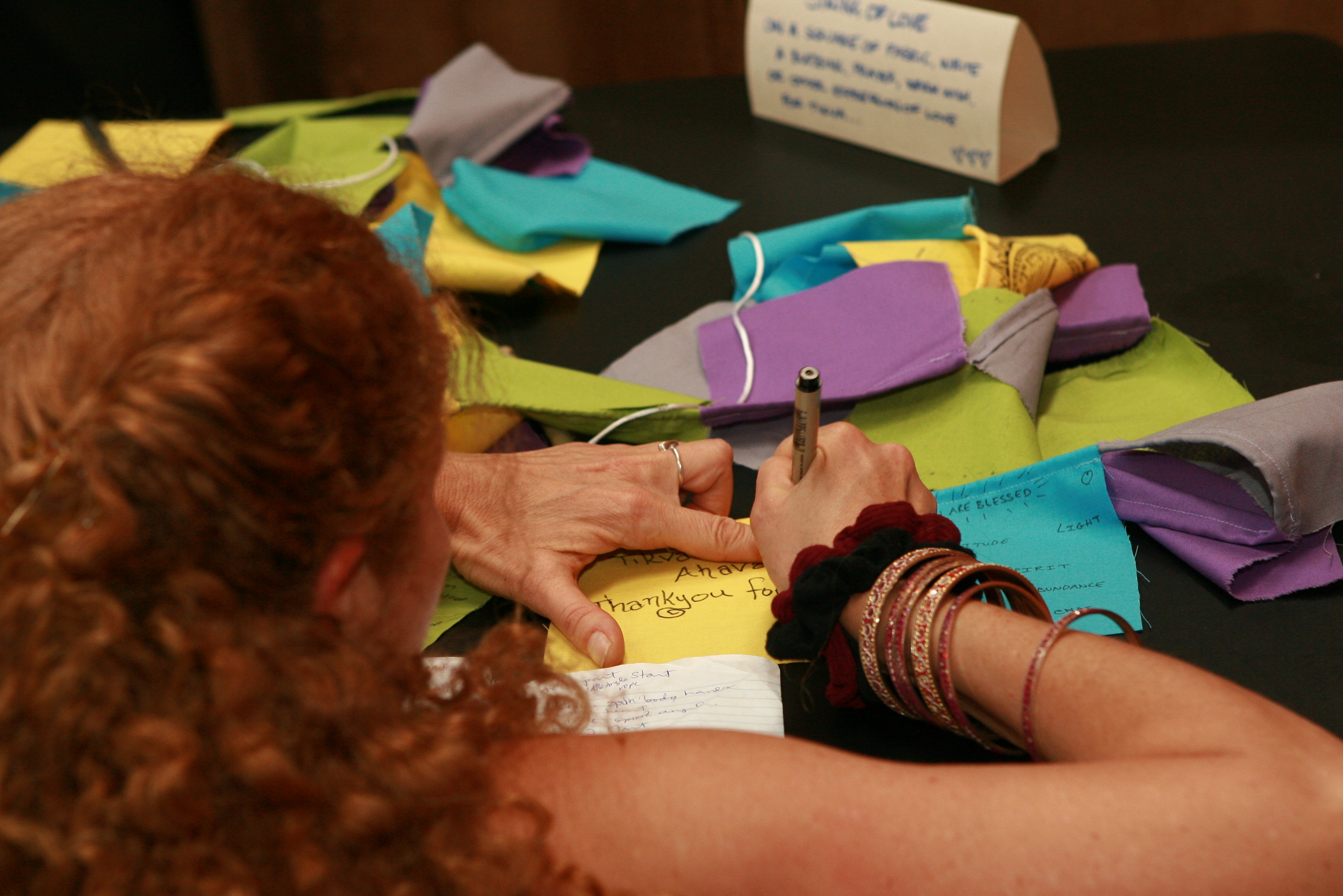
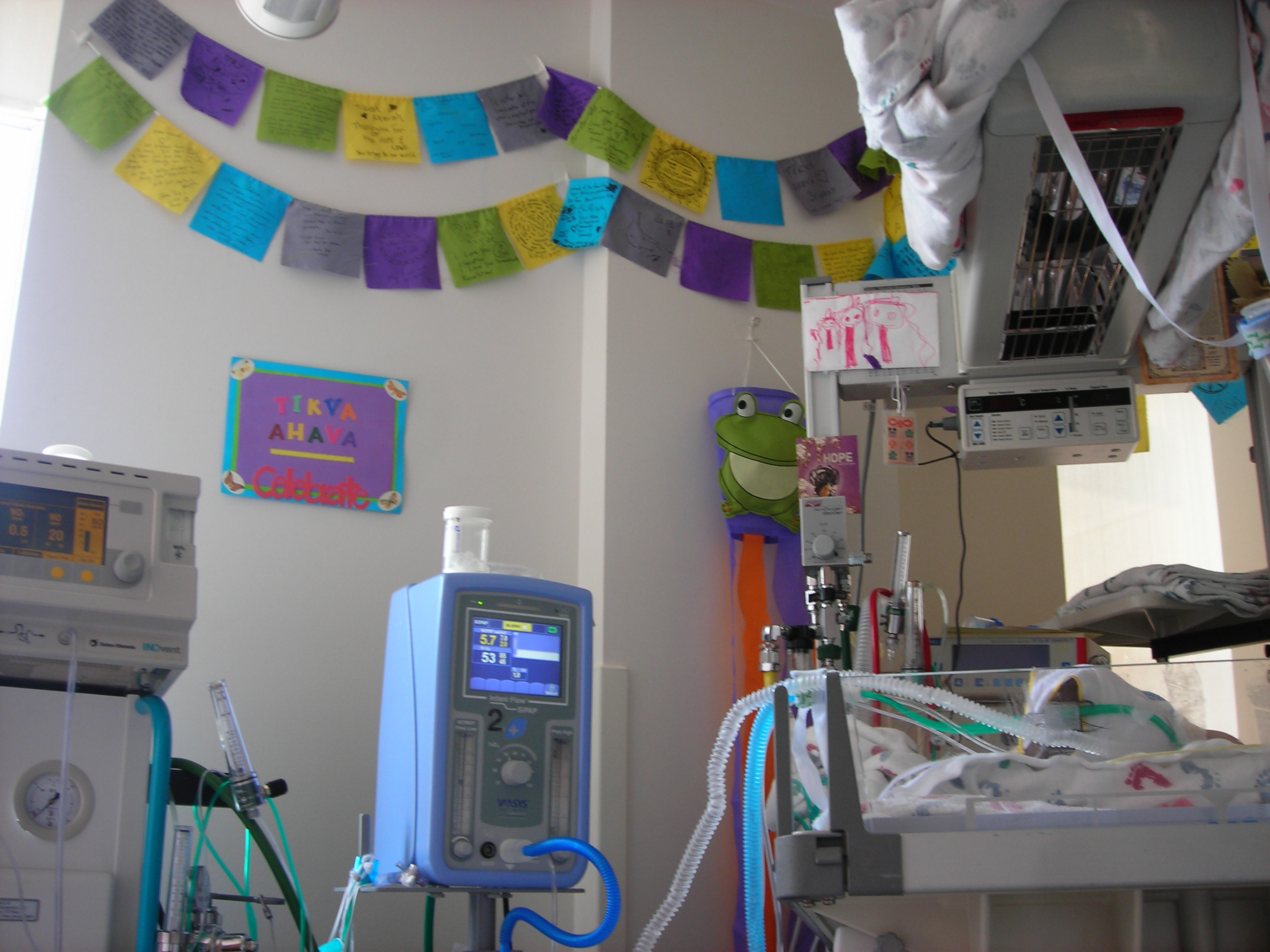
For that day, my sister had prepared blank prayer flags that people could write on, sharing their messages for Tikva. We planned to hang the flags above her tiny bed in the hospital.

RJH19107

Tikva was born 11 years ago today, in the wee hours of the morning while it was still dark outside. Just as I arrived in the labor room, I looked out the window at the eucalyptus trees that surrounded the giant mountain where the hospital sat and a red tail hawk swept by just a few feet away.

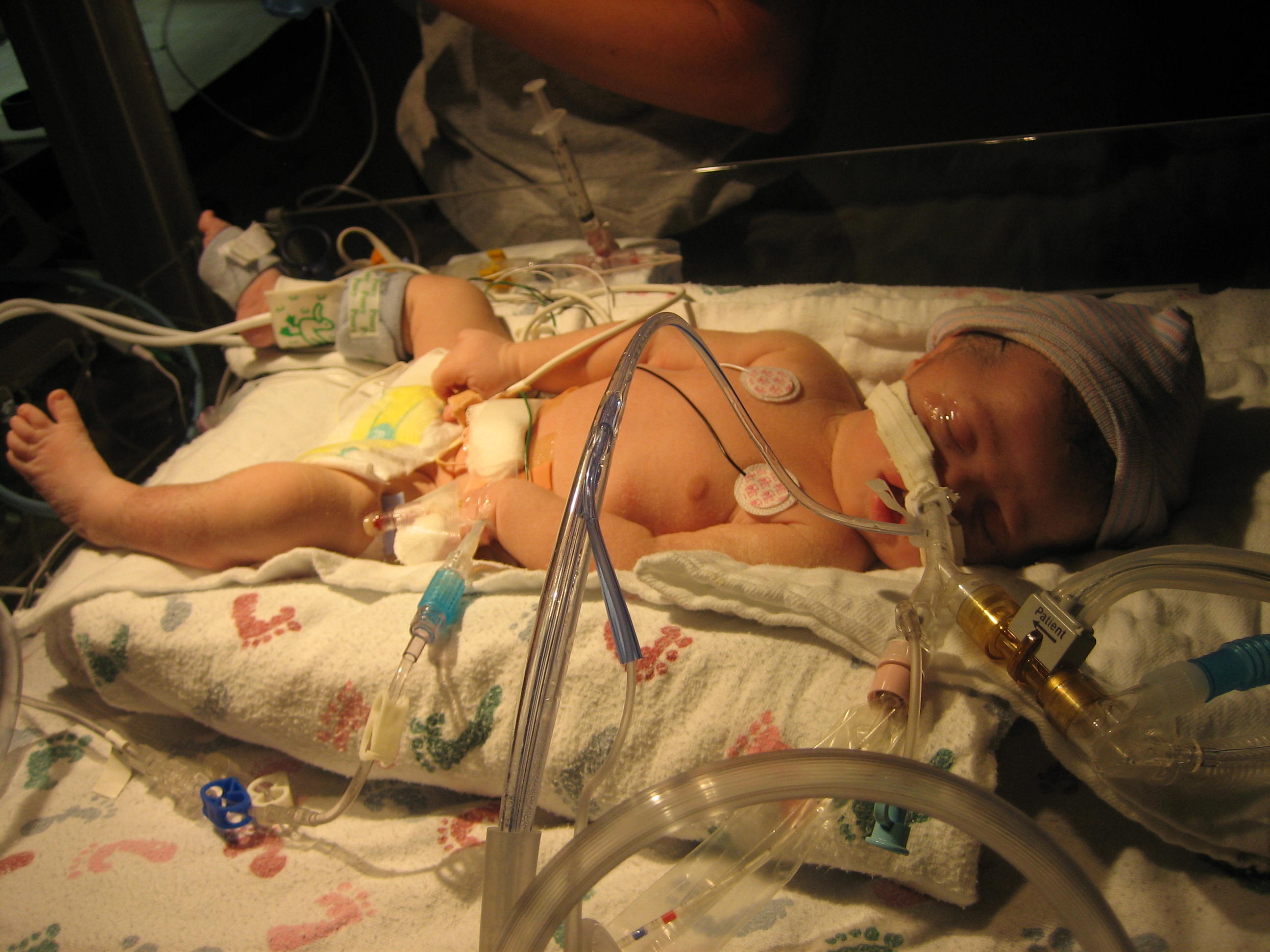
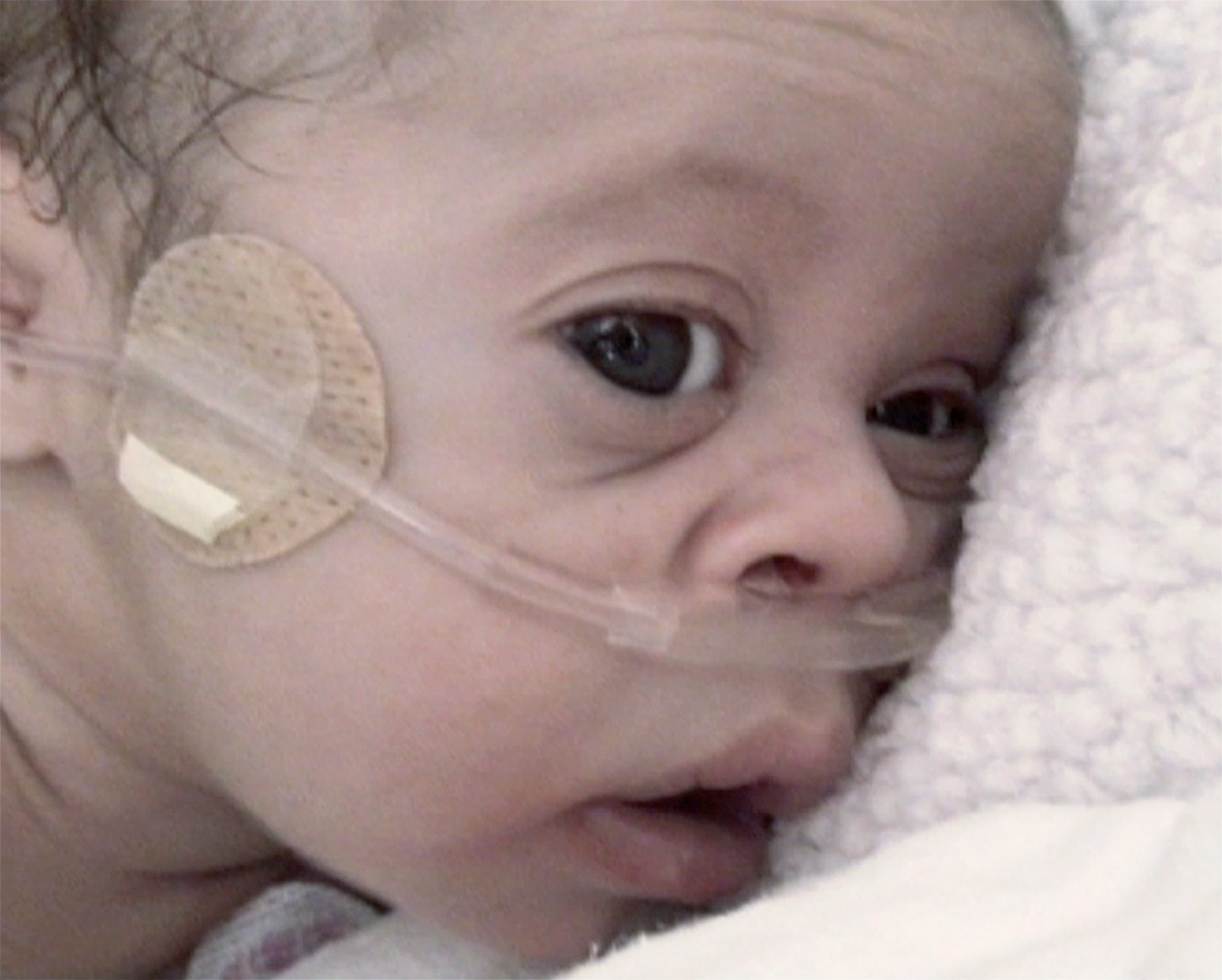
Tikva was past her due date, showing no signs of being ready to come out on her own. She knew she had a good thing going inside me, where my body breathed for her, fed her, held her safe and warm. They broke my amniotic sac to induce labor, and as soon as she came out, she was intubated because she couldn’t breathe on her own.

She was beautiful. My Baby Girl.

2008.06.10_Tikva_2

Her prayer flags did indeed hang in her little corner, surrounding her with our community’s love and holding. Above the machines attached to the wires that monitored the oxygen saturation in her blood. Above her ventilator and C-Pap and IV bags and the hospital baby blankets with the little footprints and the pictures Dahlia drew for her sister.

DSCN0214

58 days later, the morning after Tikva breathed her final breaths outside in the hospital garden, held by David and me, surrounded by her two primary nurses, Allyson and Elaine, and her two doctors, Roberta and Tom, Dr. Tom wrote to me, For all of her difficult moments, we always felt Tikva’s bed space had a special aura of love and tranquility. It was no wonder that so many of us became attached to your family and that she touched so many lives.

If you ever want to meet an angel on earth, spend time with the nurses and doctors who work in the neonatal intensive care unit. They are high souls.

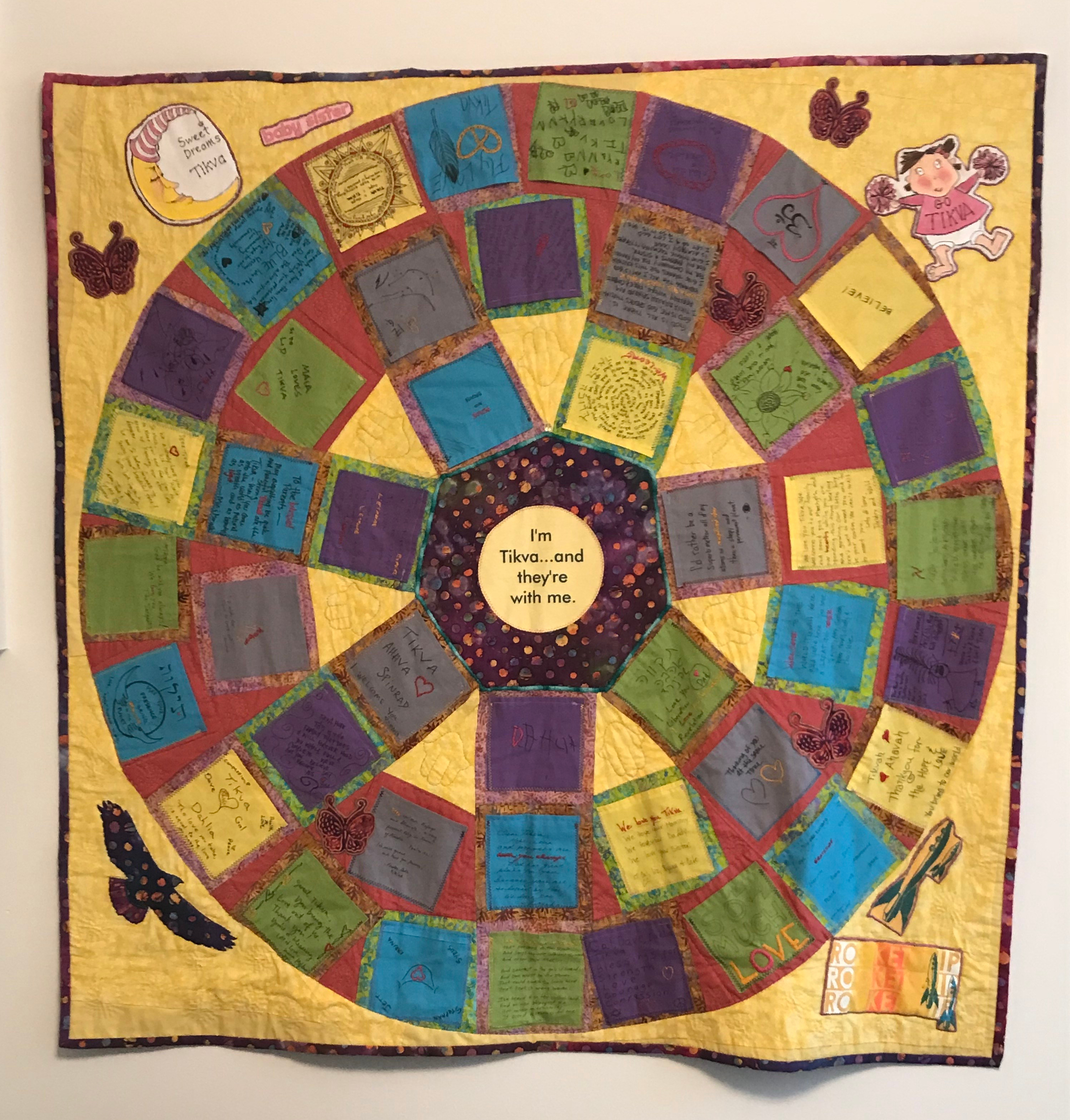
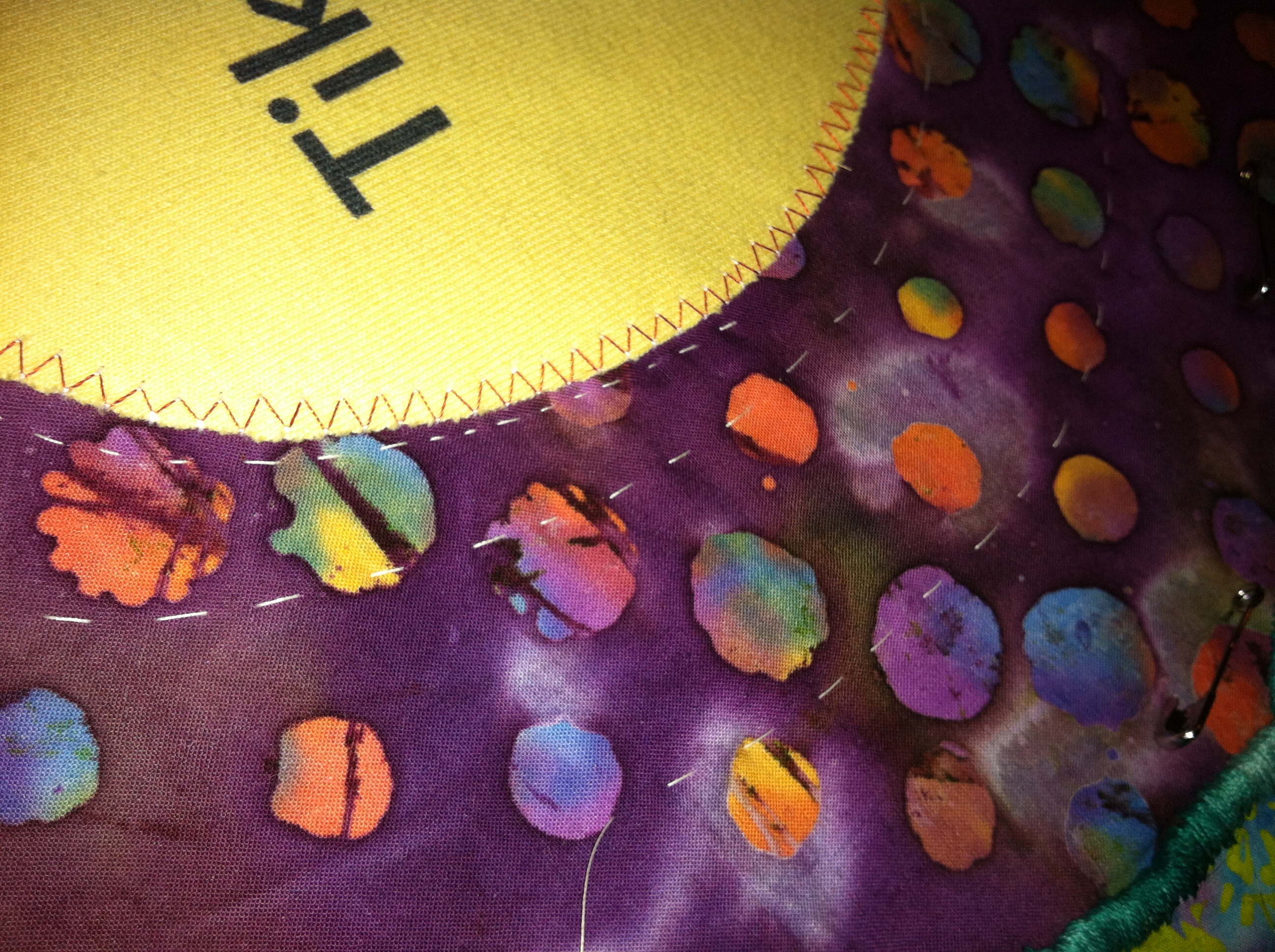
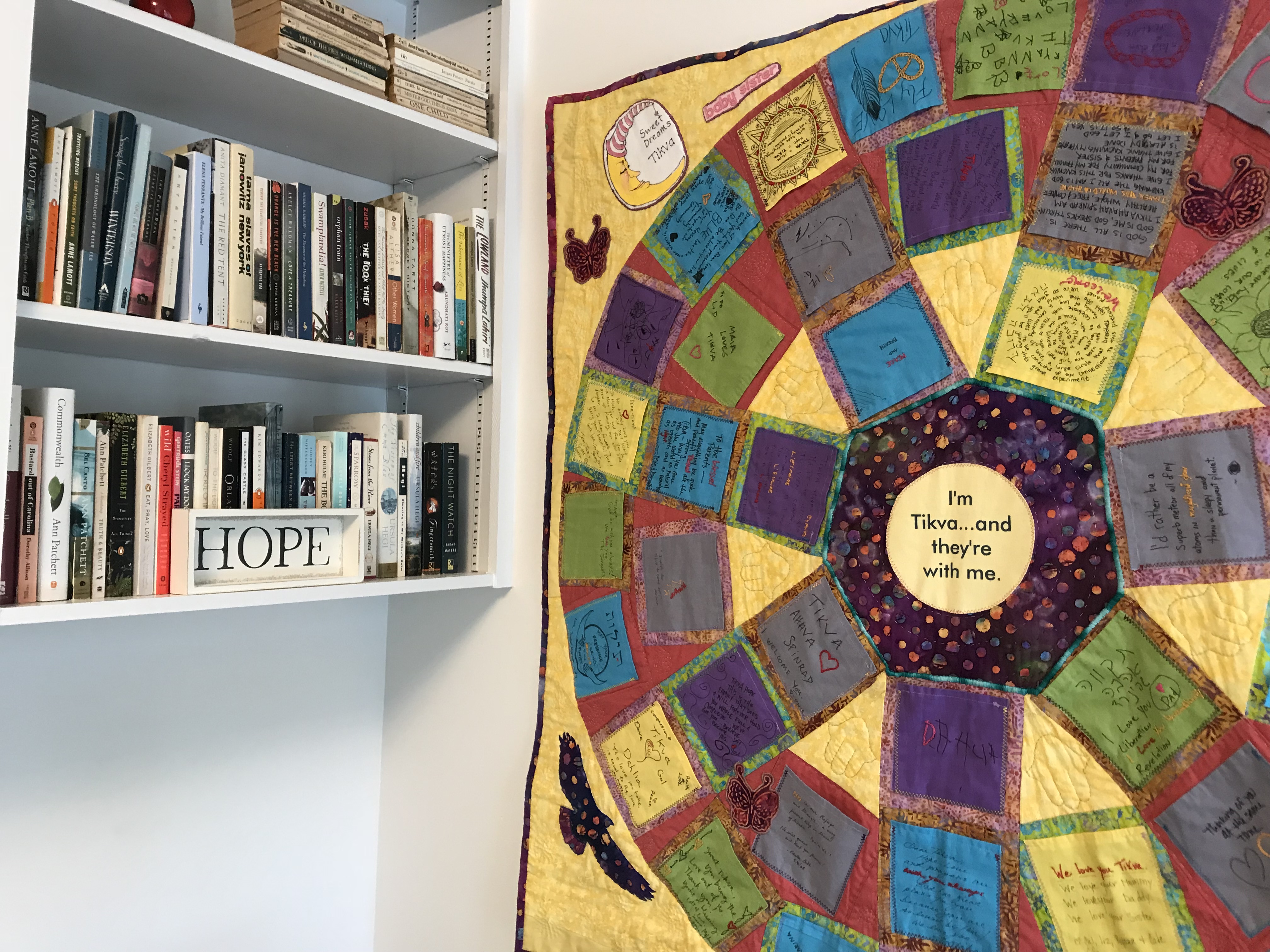
After she died, I wanted to do something with Tikva’s prayer flags, something lasting that held her story, her meaning, and the hope she brought with her. My friend Elizheva helped me begin to turn them into a quilt. I wanted it to be circular, like a mandala, because for me Tikva is infinite.

We began to sew, by machine and by hand. I never made a quilt before this one, and mostly I sewed by hand.

tikva's quilt 6 09 005[1].JPG

Tikva’s nurse Elaine asked me for a piece of the yellow fabric that would become one of the corners on the quilt. This is Elaine playing with Dahlia and me in Golden Gate Park, sometime during the year after Tikva died. I’ll never lose touch with the special people who cared for my daughter.

tikva's quilt 6 09 021[1]

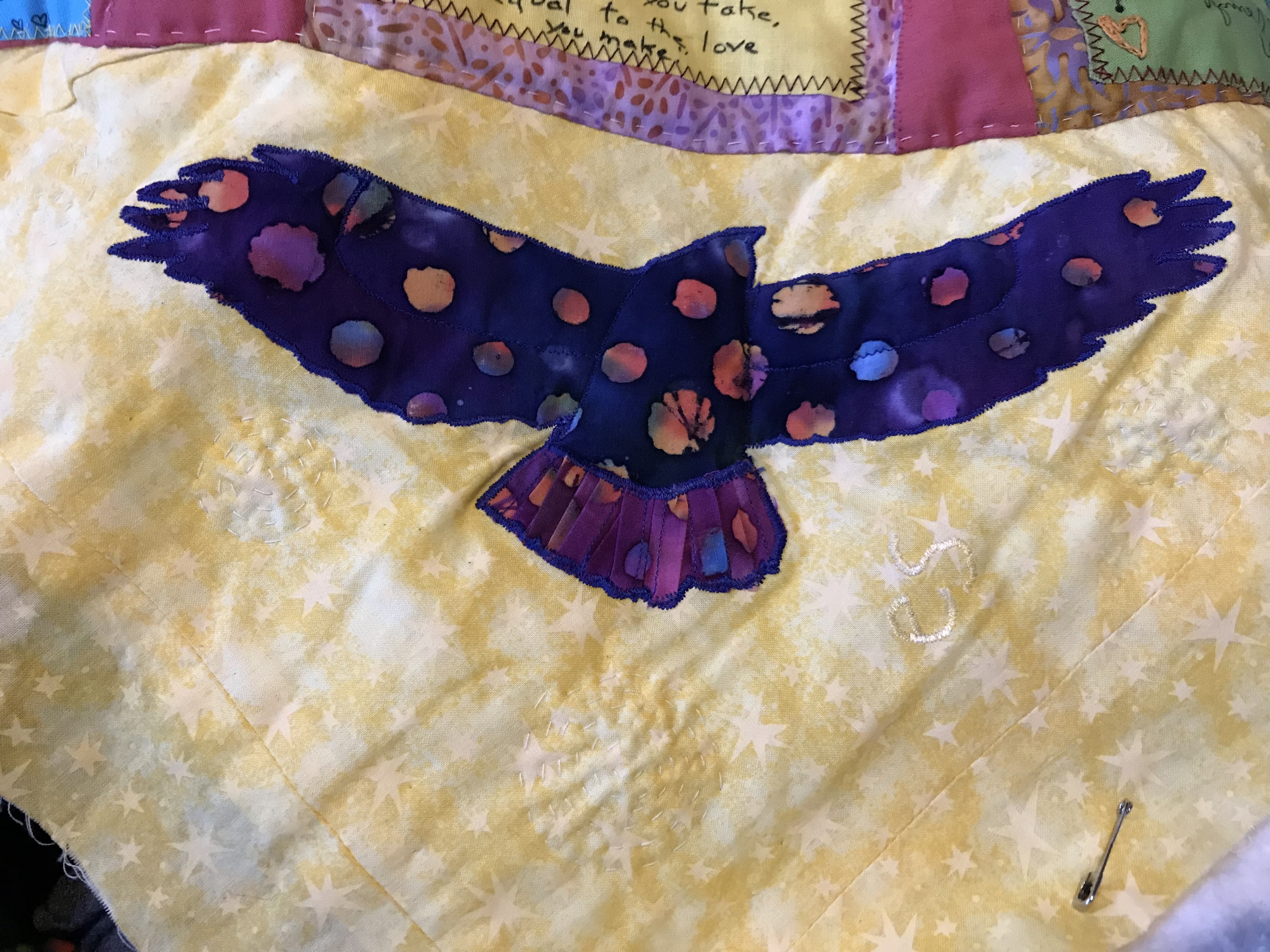
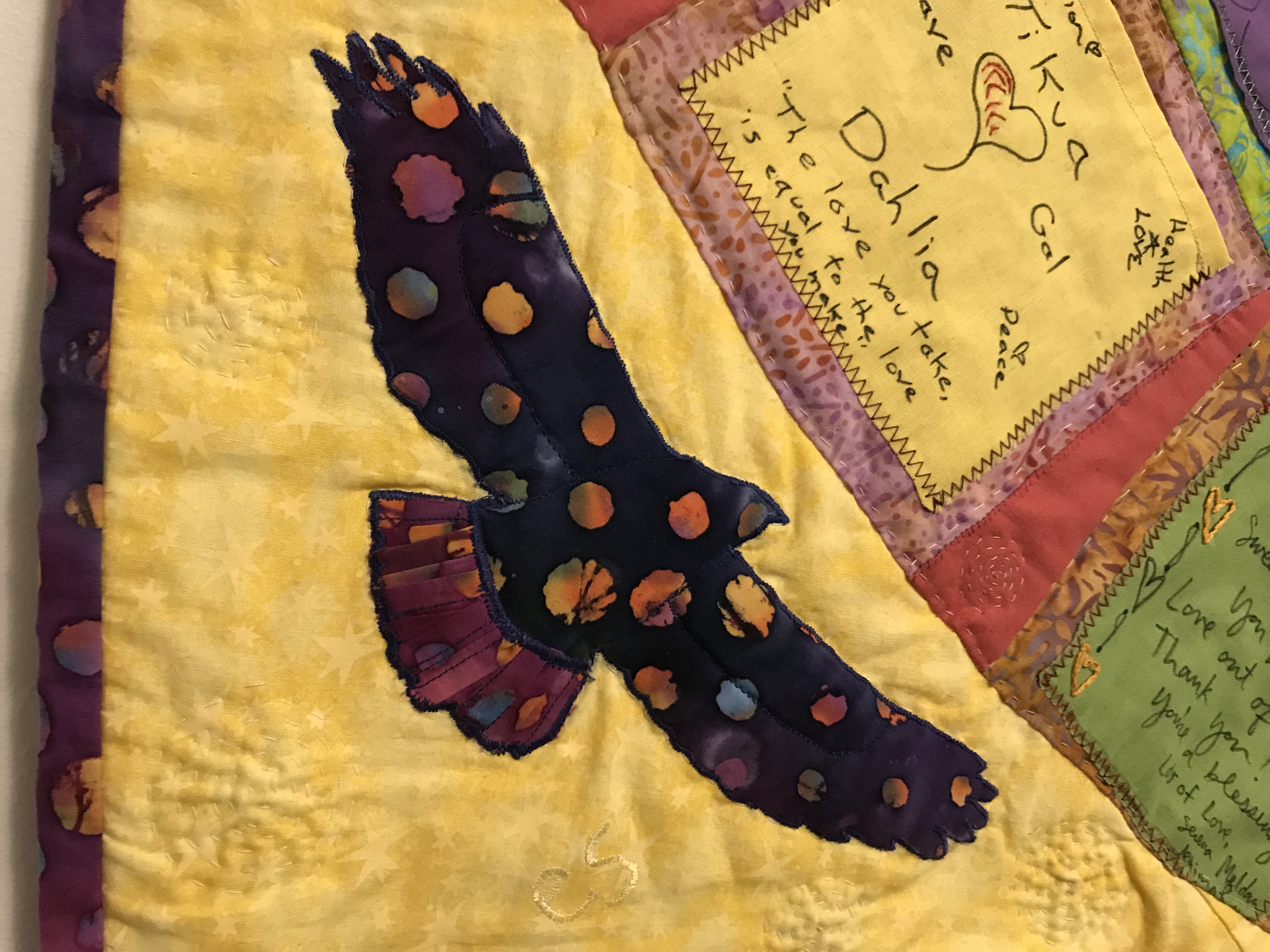
Onto the yellow fabric, Elaine quilted a red tail hawk – the animal spirit that followed us before, throughout, and since Tikva’s life. Red tail is a divine messenger, bringing messages from the spirit world.

IMG_E4530

As we drove cross-country for our move to Cincinnati, I sewed circles and spirals onto the quilt. Infinite.

IMG_0900

And in Cincinnati I connected with another quilter named Barb, and she helped me continue my project. I added the corners, Elaine’s hawk and pieces of baby onesies friends had made or gotten for us. Barb sewed the checkerboard back side of the quilt.

IMG_0898

Four years later, just before moving to Atlanta, our son Judah was born and became a part of our family through adoption. I didn’t do very much work on the quilt in the five years we spent in Atlanta – my plate was full with caring for a new baby, supporting Dahlia through her bat mitzvah and middle school, working, and being the partner of a newly ordained rabbi.

But as soon as we moved to Alexandria, I saw the wall in my new sunroom where I would hang Tikva’s quilt, and I knew I had to finish it. So I asked around for a quilter at the synagogue that was our new home, and I met Sandi. And she helped me to finish Tikva’s quilt.

When I traveled west last fall to say goodbye to my beloved mother-in-law before she died, I brought the quilt with me. I wanted her to see it, and I finished sewing it there, quilting little spirals throughout the quilt.

IMG_6382

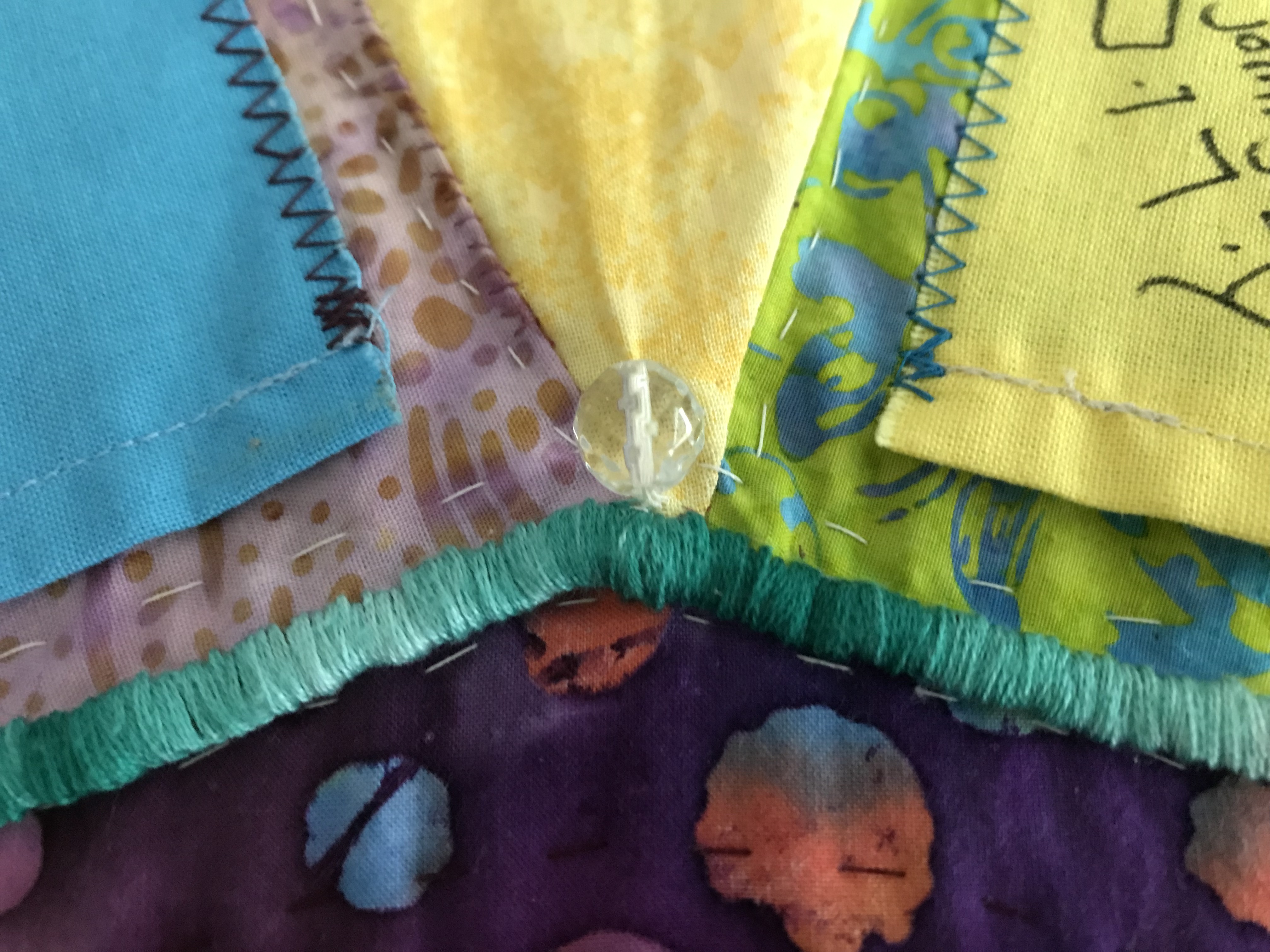
When I got home, I sewed a crystal bead onto the quilt for my mother-in-law, imagining her holding Tikva, their spirits now intertwined.

IMG_1123

I spend a lot of time in my sunroom, on the couch under my bookcases, surrounded by two of my most favorite things in the world – Tikva’s quilt and my books. It feels as though this wall was built for Tikva’s quilt, and I know I finished sewing it at exactly the right time, even if it took me ten years.

IMG_6067

I feel a strange kind of peace, 11 years later. Or maybe it’s more acceptance. Grief is no longer a sharp and jagged thing, edges smoothed by time and space. And yet I think a lot about the sliding doors that closed and opened, a parallel universe in which Tikva survived. I could be sitting on this couch with my 11-year-old Tikva, the quilt above us as I tell her the story of her beginning. Or a time and a place in which she was never diagnosed with a birth defect and was just born healthy and well like her sister – no quilt at all. Probably in a different city. In a life where we may never have met her brother.

Strange how life unfolds. Complicated and mysterious, far beyond my grasp. I’ll get cupcakes today, as I do every year, and with my husband and my children, we will celebrate the day Tikva was born. The day she changed everything.

Happy birthday, my beautiful Baby Girl. I love you forever.

The Best Picture of Tikva - Rudi Edits

hope and a heart in tatters

HOPE

Do not be daunted by

the enormity of the world’s grief.

Do justly, now.

Love mercy, now.

Walk humbly, now.

You are not obligated to complete the work,

but neither are you free to abandon it.

~ The Talmud

My husband came home from leading Shabbat services yesterday, walking into our home more quietly than usual. His voice barely more than a whisper, he called me into our bedroom to tell me something out of earshot of our children. I thought he was going to tell me that his mother had died, since he was flying out that afternoon to see her.

“There was a massacre in a synagogue in Pittsburgh this morning,” he told me. I looked in his eyes and wrapped my arms around him, and he began to sob as I held him. This strong, calm man who is a leader in our Jewish community; who has a way of maintaining equanimity through the most difficult times. My husband who is a head taller than me and at least one and a half times my weight let me do the only thing I could do in that moment – hold him. Cry with him.

His phone buzzed in his pocket and he began exchanging messages with his colleagues, conversations about security, about protecting our children at religious school the next day, about how we come together as a community in spite of, or perhaps to assuage, our fear. He was still sending these messages as I drove him to the airport, and when I dropped him off.

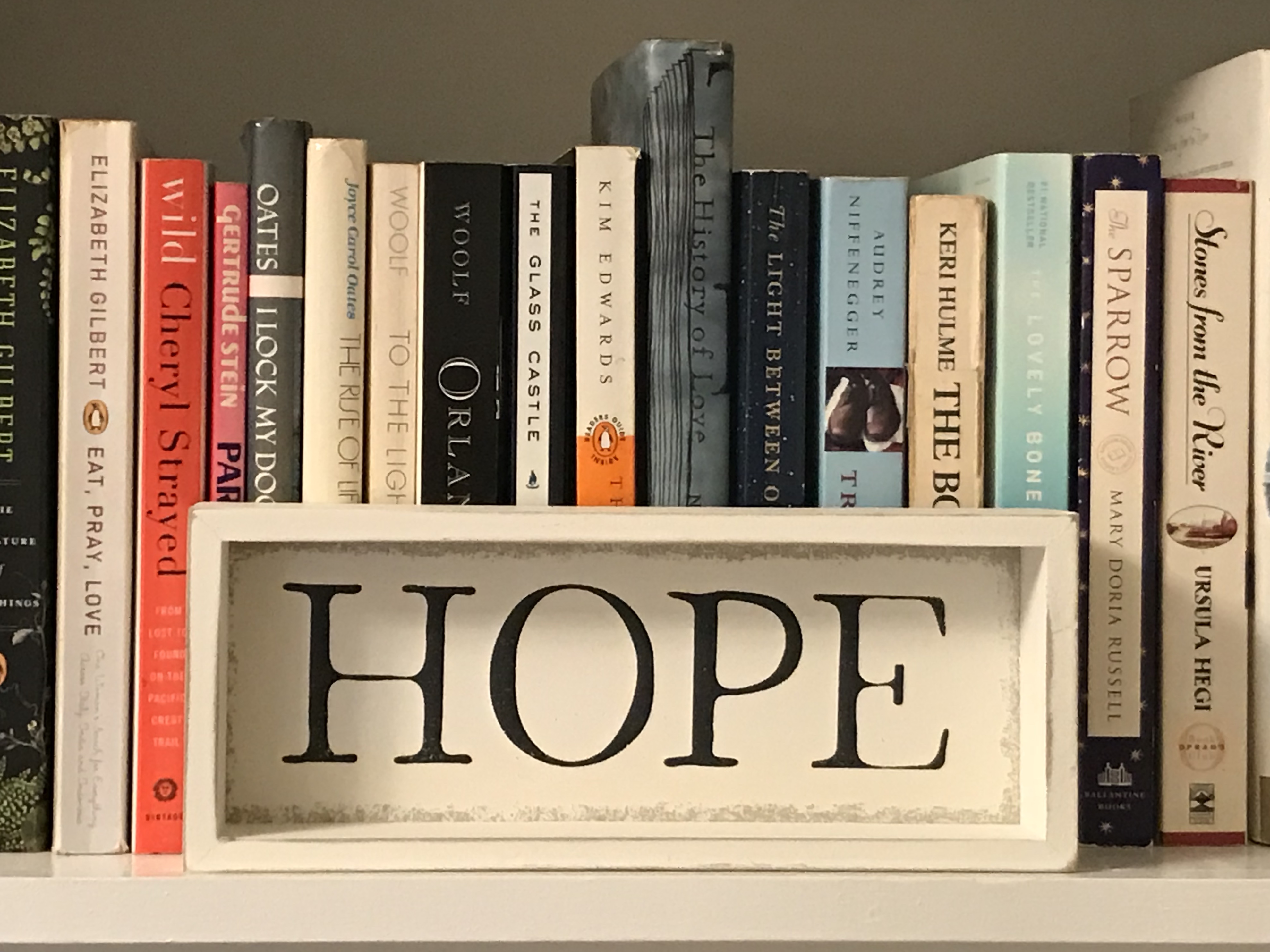
Then I went to run an errand before heading home to our children. Roaming stunned and aimless through the store, I found this little sign, one small but tenuous word: HOPE. This small thing was suddenly the most important thing in the store to me, and I held it as I continued on to get what I had come for. I brought it home and put it on the bookcase in my sunroom.

HOPE

This morning I drove our children to Sunday school at our congregation, the one my husband leads. I reminded my teenager to be aware of her surroundings and to let an adult know if she saw anything suspicious. I let my five-year-old remain unaware of how cruel people and the world can be, for a little while longer.

I parked my car behind one of the two police cars in the parking lot, the one with red and blue lights blinking. The parking lot was full. Parents and children streamed into our synagogue. Our emeritus rabbi and our cantor and a member of our board welcomed families as they arrived. We exchanged hugs.

THE PARKING LOT WAS FULL.

FAMILIES STREAMED IN.

Unintimidated, undaunted, even amid our collective fear and the weight of our sorrow.

Police officers patrolled the area, ensuring our safety. Everybody was talking about Pittsburgh. About antisemitism, about nationalism, about racism and discrimination and fear and fear and fear.

So much fear.

Of the other.

Of each other.

I am proud to be Jewish; I always have been. And today I am scared to even write this, to declare so publicly, in this space that anyone can read, that I am a Jew. Today in America, and in our world that feels like it is on a collision course with nationalism and authoritarianism, that is terrifying to declare.

But…

I am the grandchild of Holocaust survivors and so is my husband. My family on both sides were forced to leave their homes in Poland and in Egypt as refugees in the late 1940s. I work with and on behalf of today’s refugees; today’s immigrants and victims of violence who are here seeking refuge. I have a black son; his ancestors came to this land in chains.

We are Jewish.

This is personal.

And my silence only helps to let them win. But darkness can’t win, and neither can fear. That is not what my grandparents survived for.

So until my heart feels less in tatters and hope feels less tenuous, I’ll keep looking at the little sign on my bookshelf and I’ll remember this:

In my heart, LOVE WINS.


within the discomfort

FullSizeRender

I’m sitting in the sukkah on our back deck. Poles of PVC tubing hold up three walls of plastic tarps, while the fourth side of the square structure remains open. The “roof” is wooden lattice, we didn’t get around to covering it with fallen branches from the trees in the woods across the street before it started raining. The rain stopped yesterday but it still smells wet, clean and fragrant. And it’s still humid from the hurricane in the Gulf of Mexico that caused devastation in Nicaragua but was only a storm by the time it reached northern Georgia.

The sukkah reminds me of when I first went to the Burning Man festival, where friends and I constructed a geodesic dome – also from PVC – covered by a translucent white parachute. I can’t remember how many rolls of duct tape it took to put that thing together so that it created some semblance of shelter and shade from the hot desert sun. But I do remember the massive high desert dust storm that blew off the parachute and almost blew away the structure itself and everything that was inside while we kept cover inside our cars.

Everything is temporary.

So striking – and humbling – when you are in the middle of a vast empty desert, in a temporary “city” that only exists for a week. This was back when very few people came to the festival in RVs and most people slept in tents or domes like ours.

That’s one of the lessons of the Jewish holiday of Sukkot, one of the reasons we build this “temporary dwelling” and spend time within it each fall. We’re also supposed to invite people into the sukkah, including the spirits of our ancestors.

Everything is temporary.

I feel incredibly uncomfortable right now. Last night I couldn’t fall asleep, my body was restless, my skin felt itchy and dry, my belly rumbled, my mind swam with unsettledness, and I was annoyed that I was so tired but still awake.

My beloved California – where I grew up, where I come from – is burning and I am so far away. One calamity follows another right now, before we are able to catch our breath, before there is time to recover. No time to heal, no space to hope.

Everything is temporary.

I think about all of the people in the world for whom this is their always. The constant worry about where their next meal will come from. The loss of babies from malnutrition. The temporariness of homes and jobs when there is income insecurity or no jobs at all. The fragility of health. Fear of violence. And even the ability to summon up hope for something better, perhaps, one day.

Somehow the discomfort feels like my responsibility right now, like this dwelling I need to sit in and stay connected with. Especially as someone whose actual home is intact, whose family is safe and well, whose pantry is full, whose job is secure, whose car runs well, whose children get to go to school, whose skin is white.

Are most of us feeling this right now, or are there people, maybe entire communities out there that remain untouched, that don’t feel troubled, that are not concerned? Is it business as usual for anyone, or is this now our new business as usual? Is there anyone who doesn’t feel like we have fallen into an irreversible dystopia fit for fiction? Because I’ve read a lot of those books and it doesn’t feel as though we’re headed there, it actually feels like we may well have arrived. Dystopian fiction is written as a warning. What we need now are prescriptions…

for resolution

for answers

for unity

for justice

for healing.

Please tell me that everything – even our collective discomfort and all of this pain and destruction – is temporary.

capacity & tears

IMG_2103

“Well some say life will beat you down
Break your heart, steal your crown…”

~ Tom Petty (1950-2017)

I cried at my desk today. The tears fell quietly as I was reading…

About Las Vegas.

Puerto Rico.

The Virgin Islands.

Mexico.

Houston.

Florida.

West Coast wildfires.

About the genocide against the Rohingya people in Mianmar.

The violence inflicted on innocent people by Spanish police during Catalonia’s elections for independence.

The relentless disease of racism in our country.

The brutality and militarization of American police.

The mass incarceration of black and brown people on American soil.

About our national addiction to the right to bear arms over the right to live free from the fear of violence.

The destruction of the EPA because who cares about climate change when there’s money to be made.

Last night I cried into my daughter’s belly as we listened to Tom Petty, who may have, in that moment, been breathing his final breaths. I remembered details of when I’d seen him in concert in 2009, on one of the most beautiful spring nights I have ever experienced, watching the most gorgeous sunset over the San Francisco Bay. Quite possibly the most incredible live performer I have ever seen and heard.

Last night it felt as if all of the rock stars of my childhood and teen years in the 1970s and 1980s were being taken away, one at a time. Last night I felt every single one of my years, hyper aware that when you’re in your forties, the people around you start to die more steadily. Should I be getting used to this by now?

Today I learned that a childhood friend had died of cancer in the past year. That was the piece that got me in that deepest place in my gut, and then the tears fell more quickly, less gently.

A dear friend recently told me that she thinks my “heart and mind have tremendous capacity.” Most of the time I think I can hold all this, the deep pain that is all around me.

The wounds I know my refugee clients hold from their experiences escaping war and losing everything they had known before.

The brokenness and injustice, in plain view or hidden, in every corner of my city, my state, my country, my world.

The image of the two black people who were pulled over by two white cops a few weeks ago when my family and I turned a corner in our car and we pulled over to film what was going on, just in case things went south and somebody with dark skin ended up dead. Thankfully they didn’t this time, but the imprint of the potential injustice that was happening before my eyes as the cops searched the car for what…? An excuse to lock up – or kill – two more black people for a broken tail light? For driving while black?

When I was younger I used to feel like a sponge, super sensitive to all that was around me. But I’ve learned with age that it’s possible to connect with the pain all around without being quite so absorbent. How to hold the pain without it getting stuck inside. Still, though… Last week I took Facebook off my phone, with no regrets. I needed the reminder that I am the one in charge of what information I take in, and when.

* * * *

Last Friday night and Saturday was Yom Kippur. For the first time in many years, I felt moved to actually fast completely. I still drank water so that I wouldn’t get a three-day headache, but this year it felt good not to put anything else in my body. I also powered off my phone for the day, which felt amazing. During breaks from the services I read and wrote in my journal. I walked around and talked to people. I sat with two very tiny babies and their moms whom I’d just met.

I cried a lot. Not just during the Yizkor memorial service, but at other moments too. While the most incredible cellist played the Kol Nidre melody, accompanied by organ and choir and cantor, and even more magically, when he played the melody solo. While I closed my eyes and connected with each of my relatives who have died, picturing each of their faces in my mind’s eye, feeling them close.

The veil between life and death feels thin at Yom Kippur, and I held both the humbling awe of that understanding and the comfort of feeling held by my ancestors and even my tiny baby daughter who died before me.

I don’t take any of it for granted. I’ve been through hardship, tragedy, loss and struggle. I know how incredibly lucky I am for the stability and goodness of my life. For all of the people I get to love and hold dear. For my health. For my home.

For my life.

It feels like an incredible responsibility, to hold that gratitude along with the awareness that things are so bad and so hard and so incredibly messed up in so many places outside my safe little cocoon.

The awareness that there is so much work to be done, so much light I need to summon up and magnify to help balance out the dark.

And the awareness that it is all so temporary and fleeting. And so precious and beautiful. Even the tears.


resilience

Cracks

re·sil·ience

rəˈzilyəns/

noun

1.

the physical property of a material that can return to its original shape or position after deformation that does not exceed its elastic limit.

2.

an occurrence of rebounding or springing back.

3.

the capacity to recover quickly from difficulties; toughness.

****

Resilience is a big word right now. There are studies about teaching resilience and grit to children in schools. Which I think is awesome, and much more helpful to becoming a functional human than understanding geometry, or even global politics.

Facebook COO Sheryl Sandberg, whose husband died suddenly two years ago, is making the media rounds speaking about her new book and foundation, Option B, which “helps people build resilience and find meaning in the face of adversity.” I admit that there is a part of me that is resistant to the idea of a celebrity making this into a movement – giving us collective permission to grieve properly and in our own ways through our losses, and teaching the world around us how to better support us. I’ve been talking to some of my friends who have also lost young children and our conversations seem to go like this: What do you think of this? Haven’t we been going there for years now? This stuff – this really tragic, really hard, really bad stuff happens so much more than people want to know. Why does tragedy need to happen to a celebrity for it to become okay for our society to finally talk about it?

But the nagging feeling I get when I look at the Option B website is this: Do we have to make something out of our losses, our challenges, our trials? What happens if we don’t?

I think most of the time, when it happens – when we develop resilience – it’s not because we did anything. It just happens. And sometimes it doesn’t, and the hard things are just hard, and they suck, and you don’t come out the other side feeling more capable of handling anything that might come next. You are just tired and you want to shout, Enough already! This effing blows!

And that’s okay. You are not a failure if you don’t come out the other side of your awful tragedy feeling stronger, wiser, or more resilient. You are not better than with resilience than you are without. There is nothing about resilience to be proud of. Resilience doesn’t have to be the goal. In fact, there doesn’t have to be any goal when life is hard except getting through a day.

Recently I had the thought that I have earned my resilience out of all that I have suffered or struggled through or overcome. But have I really? Or did the resilience I have just develop on its own? Maybe it’s even something I came into this life already possessing.

I just don’t know that I buy the notion that what doesn’t kill us makes us stronger or more resilient. The idea that we are transformed into better people out of what we have lost, what we have grieved, what we have suffered. Because I would give up my resilience and strength and wisdom in a heartbeat if it meant that my baby didn’t die eight years ago and instead was a healthy girl about to finish third grade and celebrate her ninth birthday. Or that my parents hadn’t turned my world upside-down at age 15 when they divorced. Not to mention how quickly I would give back the autoimmune condition I have struggled to live a normal life with for 20 years.

Because living children are better than resilience. And physical health is better than the emotional strength gained from surviving an illness. And a stable family of origin is better than the wisdom I gained from being independent and responsible beyond my years as a teenager. All those hours in therapy and doctor’s offices and the neonatal intensive care unit took a lot of time, energy and money I would joyfully have spent otherwise. Like on a beach in Hawaii.

I get it: The human search for meaning, especially building meaning out of adversity. It’s what keeps us moving forward. It helps us to rebuild. Otherwise nothing makes sense, and it all feels like a big cruel joke.

But what if we can let it be okay to just live through adversity and arrive at the other side cracked, or even completely broken? What if we don’t have to overcome or become stronger, but just figure out a way to put one foot in front of the other and wake up each day feeling a little less shitty than the day before? What if there will always be a part of you that is keeping an eye over your shoulder for the next unexpected kick in the back of the head?

This is the thing: I don’t think we bounce back out of adversity to how we were before. Adversity changes us completely, forever. Even in our cells, our DNA. (see: epigenetics)

I think the idea of rebounding or springing back – which is often part of conversations about resilience – can be a setup for feeling 100% like a failure, even if you do manage to come out the other side a little stronger. You don’t bounce back because there is no back to go back to. You just do your best to move forward, maybe evolve a little, maybe transform a little – or maybe you just find yourself in unfamiliar surroundings, hardly able to recognize yourself, but accepting your changed self anyway. Because that’s your only option.

That kind of acceptance can require an enormous amount of forgiveness. Towards ourselves, mostly.

Maybe – not even by doing anything intentional – you even exceed your elastic limit, and you become bigger. Not better, just more expansive. Because we aren’t static. Even when we feel like shit, part of that feeling comes from knowing that there is something that feels just a little bit better. Even if we don’t exactly know how we might get there, or if we even want to.

After I lost my baby daughter, people would say things to me like,

I just don’t know that I could survive what you’ve survived.

And also:

You’ve been through so much.

With all you’ve been through, how are you as grounded and balanced (as you seem to be; meaning: How are you not a bitter, angry mess?)

You’re so strong. (Meaning: From now on, this is how we expect you to be.)

You’re so wise. (Really?)

And I would reply, But you would survive. Because you just do. Because you aren’t given any other choice.

I’ve surprised myself with what I can survive. People around me surprise me constantly, too. Friends and family battling cancer. My refugee clients at work. Everyone I know who lives with a chronic illness. I just don’t know that surviving is any great feat. It’s just what we do when shit happens.

I don’t get knocked down easily anymore.

I have survived “the worst” already, but I also know that doesn’t mean there definitely isn’t any more “worst” to come.

I know that I can handle what life is going to dish out next.

Maybe partly because of resilience, because of strength, because of wisdom.

But mostly because I just know I have to.

Perhaps that’s all resilience is. One step in front of the other. Forgiveness. And being really, really gentle with ourselves and each other.

Because life is hard, and it can be good too. That much I believe.

the way back

img_4369-version-2

As I got into bed last night around 2:30am, I told my husband that I felt like I had fallen through a hole in time and landed in an alternate reality. Like the dystopian fiction my father introduced me to when I was my tween daughter’s age: Huxley, Orwell, Bradbury, Camus. As if real life were still moving forward somewhere in the place I had fallen from, and I just wanted more than anything to find my way back there.

I lay awake for a while, knowing sleep was going to be elusive even though I was physically, mentally and emotionally sucked dry. I thought of all the people celebrating the 2016 election while I was lying in shock, the depth of sadness I feel today only barely registering. I practiced the words I would tell my daughter in the morning, when she woke up and realized that we hadn’t woken her up from sleep to hear the victory speech of the first woman president.

I don’t believe people are inherently bad, but I do believe that when we act from a place of scarcity rather than abundance, of fear instead of trust, of individualism over connection and collaboration, that we can do incredible harm and create rifts that can take generations to heal. I don’t want to be a part of that.

I woke up this morning and recognized a familiar feeling. It’s hard to describe, but it reminded me of the day over eight years ago when I woke up from a dark and brief sleep and realized that I had – the night before – said goodbye to my baby daughter Tikva as she breathed her final breaths. In that remembering, I felt a combination of shock, bewilderment, disbelief, the beginnings of a grief that I would (will) never quite completely shake, and this question:

How will I ever reconnect with hope?

There is one difference between that morning in 2008 and this one today. I have the gift of hindsight, the gifts of my experience, and the big picture of all I have gained since then. I know how I found my way back to hope.

It was a dark time, and for days, weeks, months, and even years I felt it all – anger, sorrow, fear, regret, doubt, hopelessness, aloneness, grief. So much grief. I cried and I wrote and I cried and I wrote and I questioned every single moment of my daughter’s short life and I screamed WHY at the universe, which had no answers for me.

And then, as I did all those things, I began the long, slow work of healing. And I did it, without realizing at the time, like this:

I connected. I met other parents who had lost their babies. It was painful and terrifying because all of a sudden there were a million ways babies can die, and I became aware of how often it happens and how many cracked hearts there are in the world. But those parents – they saved me. We saved each other. Connection saved us. It saves us every day.

I wrote. I wrote as if my life depended on it. I shared my experience for my own survival. I shared in others’ experiences as a witness, as a friend on the most difficult road. I put aside shame and self-consciousness and fear of not being good enough and I spoke openly about my experience. And I heard from others that they understood, that they felt understood. And I was able to turn some of my pain into a love that I could share with others.

I owned my story. I took responsibility for it, recognizing it as the greatest gift my daughter had given me. I started to practice radical self-love, forgiving myself for the ways I thought my body had let her down. I told my story in a new way – as a story of the mighty power of unconditional love. As a story of resilience. Even as a story of hope.

I reached way beyond my comfort zone. I sat with the discomfort until its edges softened and ease sneaked in. I trusted that I could contribute to the collective healing even as I was struggling to heal myself.

I became relentlessly determined to be a light in the world. Because I have held both life and death in my arms, and I don’t take anything for granted. Because on my daughter’s headstone are the words, “Love is all you need.” Because I know that I came here in this lifetime simply to love and to connect.

This morning I said to my husband, “I really need to read something today that is going to give me guidance on how to move forward. How to regain hope in order to dissolve the fear and sadness I feel.” I held my children tight before sending them off into a world that feels changed from how it felt yesterday. I went on Facebook and found comfort there, in community. I cried. I listened to Paul sing Let It Be and Hey Jude. I cried some more.

I don’t know that I’m going to find that single piece that will tell me what to do because I think the knowledge of how to move forward is going to come out of each one of us – together. But I am determined to find my way back to hope, so I promise you this:

I will connect.

I will write.

I will be responsible for the story I choose to tell and the words that I use.

I will dare to do uncomfortable things and put myself in uncomfortable places in order to bring about justice for all people.

And I will remain relentlessly determined to be a light in the world.

Will you join me?

for b.

IMG_3063.JPG

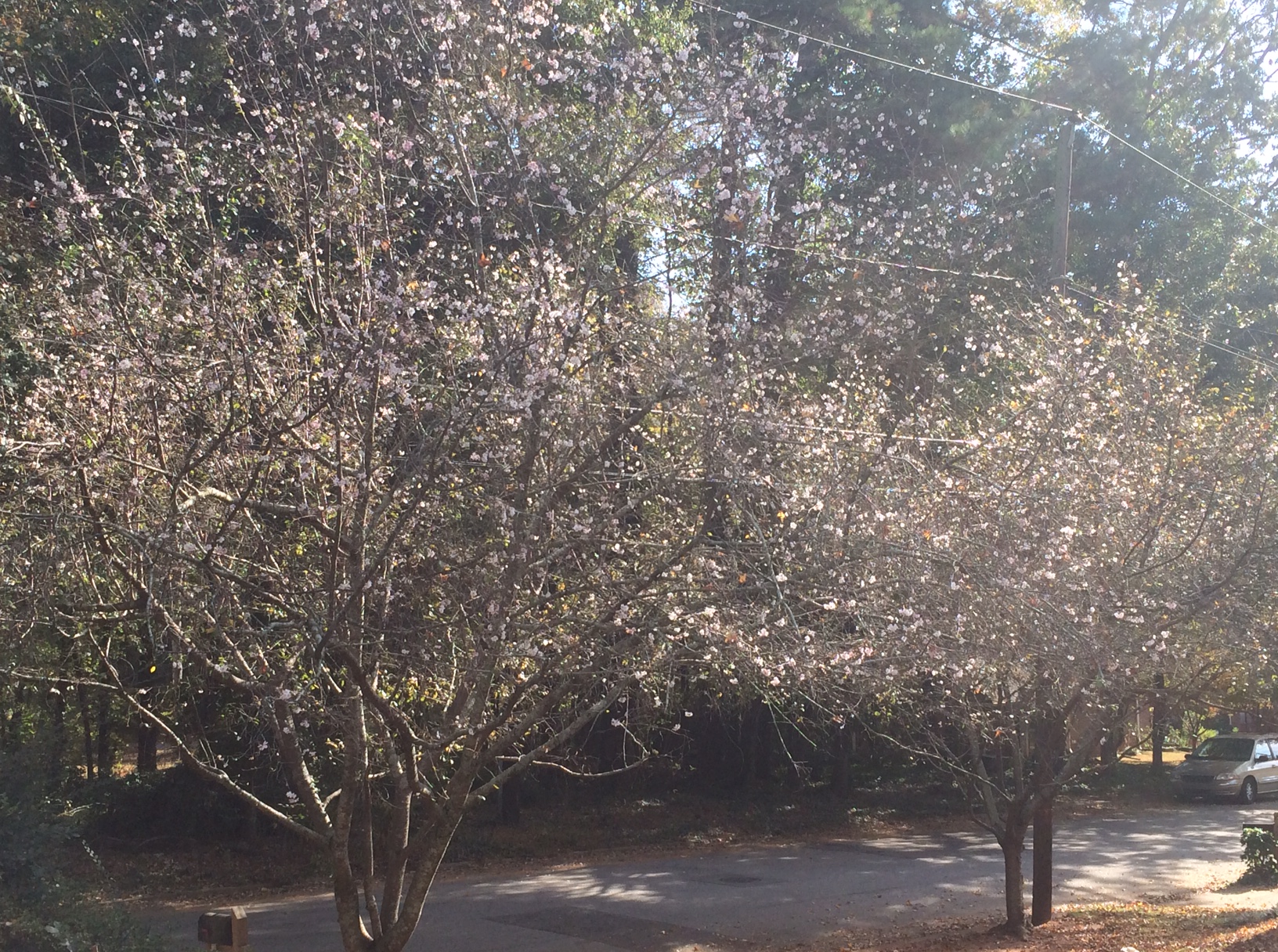
There are two trees in front of the house next door. They bloom twice a year, once in the spring along with all the other trees, and again in the fall after they have lost their leaves. I never knew trees could do that, and even though I’ve seen them bloom twice before, this year again it amazes me. It feels rebellious, audacious. Generous. These beings of nature that do their own thing but manage to give of themselves in the process.

I’ve been connecting with some very old and very dear friends the last few days, some with whom I haven’t spoken in years, following the passing of a friend we all shared. It hit me that I am at that age – when friends my age start to go. I’ve lost important people in my life – grandparents, friends, my child. I’m not new to death or loss or grief. But this hit me differently.

Life feels tenuous today. I feel hyper aware of something I know but manage most of the time to ignore: that nothing is guaranteed.

And yet here we are. We bloom when we can, we fall when we can’t stay up. And then sometimes we manage to bloom again, like those trees.

Like those trees, we reach out to each other, but sometimes not enough. Sometimes it takes a loss to remind us.

This is for you, B. Thank you for your adventurous and generous heart, for your wit and humor, and for all you gave of yourself to all of us who love you.


(im)permanence

Milkweed

Last night was the first StoryWell storytelling event hosted by The Well, a program of The Temple in Atlanta, GA. I was honored to be among six storytellers sharing personal stories based on the theme of permanence. Here is my story, both the audio and the text.

(im)permanence – StoryWell audio

I had a dream that she came out of my belly. She came out to tell me that she was a girl, and that her name was Tikva. She came out to tell me and then she went back inside.

I wasn’t sure what to make of the dream. In the morning I asked my husband, “What do you think of the name Tikva?”

“Hope,” he said. “That’s nice.” That was it, in that moment. It was still early, I was only halfway through my pregnancy. We put the name aside – a possibility. We didn’t know if she would be a girl or a boy.

Ten days later we got in a cab and drove to the other side of Jerusalem for the ultrasound – the big one you have in the middle of your pregnancy. The one to make sure everything is okay with your baby.

We took our older daughter, she had just turned four. It never occurred to us not to bring her. At her ultrasound the doctor had happily told us, “Everything looks perfect. Enjoy the rest of your pregnancy.”

There are three words you never want to hear from a doctor. Three words that change your life forever:

“THERE’S A PROBLEM.”

We had told him we didn’t want to know the sex of the baby, that we wanted it to be a surprise. But as soon as he told us something was wrong, it became so important to know this simple thing that would allow us to connect with our baby.

“She’s a girl,” he told us. Of course she was.

“Tikva,” I said to my husband. “Hope. That’s her name.”

We went home broken. Scared. The known had become unknown. My vision of what awaited my family was blurry. Frightening.

Would Tikva live past the moment of her birth? Would she overcome this imperfection that made her wellbeing so tenuous? Could modern medicine save her so that she could live a long, full life as our daughter?

How long could I keep her inside me, safe and held?

My husband walked to the Western Wall to pray. I gave him my prayer for my daughter on a tiny piece of rolled up paper.

Please, God, don’t make me bury my daughter. I won’t survive.

It snowed outside that January in Jerusalem. The city shut down as its single snowplow struggled to clear the streets. Somehow I made it for a second ultrasound and an amnio.

I made phone calls to specialists all over Israel. I sent emails back home, to San Francisco, connecting with experts there who understood our daughter’s condition. All of them encouraged us to come back home.

I cancelled our lease and packed our suitcases, and we landed in San Francisco the day before Valentine’s Day.

****

She was born 4 months later.

MY TIKVA. MY HOPE.

The moment I pushed her out and my husband cut her umbilical cord, she was swept away to be put on a ventilator.

I developed a love-hate relationship with that ventilator – this machine that kept her alive, weakened her airways, required a feeding tube so she could be nourished by my milk, and made holding her so complicated.

There was a brief period that started around day 30 when she didn’t need the ventilator, only oxygen. The doctors talked to us about what it might look like when we brought her home, how she would need oxygen probably for many months. We were ready for anything.

Please God, just let our daughter come home.

We held so much hope.

Tikva struggled. Our tiny seven and a half pound girl fought for her life. She wanted to stay, I really believe that. But her body was too fragile. She could never get enough air.

On the morning of day 58, as I pumped my milk for her, showered and got dressed, I had a feeling it was time. I didn’t say anything to my husband about what I felt, but later he told me he also knew. I headed to the hospital, and after taking our older daughter to preschool, he met me at Tikva’s bedside.

She had had a rough night in the critical care bay of the NICU. Her oxygen numbers had dropped frighteningly low. Twice the doctors and nurses rushed to her bedside as the words “CODE PINK” resonated over the hospital loud speaker. This time the code pink was for her.

I looked down over her and asked for her guidance. She opened her eyes to look at me and she told me she was done struggling, and it was time for her to go.

Please Tikva, please know how much I will always love you.

We took her outside for the first time in her short life, and her last breaths were of fresh misty air, no ventilator.

I held her as she died, and I did bury my daughter. And I survived.

****

She came out of my belly in a dream that winter to tell me her name was Tikva. She came out of my belly again in summer to teach me these three things:

She taught me how to hold onto hope when everything is unknown.

She taught me that all I needed to do in my powerlessness was to love her unconditionally, for as long as we had together, and forever after that.

And she taught me that everything is both finite and infinite. That nothing is permanent except love. That impermanence makes each moment so incredibly precious. And that we survive our losses and our struggles because even those don’t last forever.

In that time each fall when the milkweed seeds float around, or when I look up to see a red tail hawk flying overhead or perched in a tree, I feel like Tikva is there.

And as soon as those brief moments end and the milkweed and the hawk float away, I know she is still there.

Infinite.

My greatest teacher.