fresh spring air

I attended a funeral yesterday for someone very dear in our community. Her death was unexpected, accidental. Her time came too soon. It was a graveside funeral attended by so many. She was such a presence in the community that it’s impossible right now to imagine it without her. She was one of the first people I met here almost two years ago, instantly welcoming. She embraced my children and they loved her right back.

Hers was the third graveside funeral I have attended in my lifetime. The last one was for my baby daughter, Tikva, almost seven years ago. My most vivid imprint from that day was that her coffin was so small that the man from the funeral home carried it in his arms, without the gurney he had brought that is used for larger coffins. The first graveside funeral I went to was in Paris almost 20 years ago when I traveled with my father to be with our family as we buried a patriarch, my beloved great uncle. The other funerals I’ve attended have all been indoors, in a chapel or synagogue or church.

When I was in eighth grade, after a fierce battle with cancer, my grandmother died just a few months before my bat mitzvah. She was a Holocaust survivor and her determination and fight showed in how long she survived with pancreatic cancer. I loved her so much; being in her presence was like being enveloped in love and nurturing. She knit, she crocheted, she cooked, she baked, she hugged. It was April when she died and the grave diggers were on strike, so she wasn’t buried until a few weeks later. My mom didn’t let me go to the cemetery that day, I’m not sure why. She said it was enough that I had been at her service at the funeral home a few weeks before. It didn’t feel like enough to me. Perhaps there is some kind of closure in seeing a loved one’s body lowered into the ground, and something inside me knew I needed that. I had dreams for years afterwards that I carried my grandmother’s coffin around, looking for a place to bury it.

When I was a freshman in high school, a friend took his own life on the train tracks behind the school. I remember the cops thought a homeless person had been killed by the train, because it was 1986 and my friend wore a trench coat and dyed his hair black, and only homeless people wore trench coats, right? I remember the minister at the church service wore a belt buckle that said “BOB.” I think Pink Floyd was played.

I’ve been to two viewings at Catholic funerals, but only entered the room where the deceased lay at one of them. Viewings are unfamiliar to most Jews, whose dead are buried naked except for a muslin shroud and sometimes a prayer shawl, in a simple pine box, and caskets are always closed.

****

At one point yesterday, close to the end of the service, I moved away from the crowd and looked down the hill, listening to one of the rabbis as he spoke so beautifully. I don’t know what I was thinking about exactly, but it felt as if I were holding all of the deaths I had experienced in the past and all the deaths that awaited in the future in that one present moment. I took a deep breath, then another. Cemeteries have always felt strangely peaceful to me, especially on sunny days. Birds flew overhead, a fuzzy caterpillar walked on the grass and paused for a moment next to a man’s shoe, a turtle swam in the man made lake nearby. At my feet was a headstone for a man named Sol who had died in 2002 at the age of 92. I hope I get at least 92 years.

There is so much I don’t know about what awaits me, but that doesn’t really scare me. It’s kind of freeing to accept all I do not know. I go about my days hoping I will get so many others. Then I stop to pause in moments like these – standing graveside waiting to help shovel dirt over the burial place of a friend – and I think about how precious life is, how finite, how miraculous. In Tikva I learned that some souls do all of the work of an entire lifetime in 58 days, while others need decades. From my friend who was buried yesterday, I am reminded to live fully, to love unconditionally, and to show gratitude for how precious it all is and how lucky I am to be able to take another deep breath of fresh spring air.

Rest in peace, M. I will miss you.

wired for love

Love is all you need

“The only map of your right life is written on your soul at its most peaceful, and the only sure compass is your heart at its most open.” ~Martha Beck

****

What did you come here to do? What is that thing at the core of your being that most vividly expresses who you are?

Did you come to dance with confident abandon? Did you come to nurture others? Did you come to make the world more beautiful with your art, with your poetry, with your song?

What drives you? What pulls you? What moves you along the road of challenge and growth and expansion?

Are you driven by connection? Are you drawn to success? How do you know you have succeeded?

Are you wired for love?

****

I know this about myself: Love is what guides me, it is my North Star. In everything and always. Love is at the heart of all that matters to me. I think I have always know this at my core; but at this time, in this place, I am sure.

In the weeks leading to our wedding, my husband and I were asked by a Jewish teacher, What is the one word that best describes the other person for you? My husband, in my eyes, was calm. To him, I was caring. I believe in these, believe that they are more than just a representation of what each of us needed from the other.

****

Beatles music was the anthem of my childhood. I spent hours lying belly down on the shag carpet of our living room, Beatles songs playing while I looked at every detail of their vinyl album covers and followed along with the lyrics. George Harrison was my favorite, for me the most handsome Beatle. I preferred Paul’s voice to John’s, but some of John’s songs were my favorites. I could sing along to practically every song on every album with every member of my family. We always joined together on the shoop in Come Together, no matter where we were in our one-story house, where the walls were paper thin and sound traveled freely. I remember shooping together in the car on road trips when I was very little in France. I took to heart John’s reminder that love is all you need. Paul guided me to let it be when life felt heavy. Rocky Raccoon would invoke images in my mind inspired by the westerns I watched on TV with my dad. One day I might have to write a book titled, The Story of My Life in Beatles Songs, something like the Sgt. Pepper movie from 1978, which caused a short-lived crush on Peter Frampton when it played on TV in fourth grade.

In the months after my daughter Tikva died 58 days after she was born, we asked each other what should go on her headstone besides her name and the dates of her short but huge life. As the mother of a dead child, creating my daughter’s headstone was a way in which I could express my love, a way I could still mother her, call out to the universe that she will always be my child. A way of honoring the greatest lesson she taught me – I believe the most important lesson I will ever learn: how to love unconditionally.

Following our first meeting with the owner of the headstone company, sitting at an all you can eat salad bar with my husband, it was clear what those words would be:

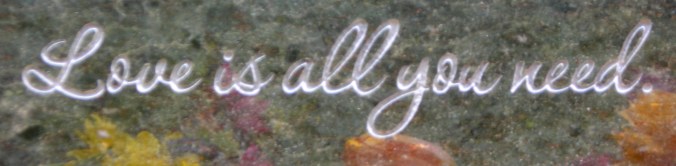
Love is all you need.

The Beatles had played in the children’s hospital OR the day the doctors took our fragile daughter to another floor for an echocardiogram. Hey Jude, Let It Be, and All You Need Is Love, one song after another guiding the medical team. Her eyes were open so wide during that procedure as she experienced the shock of being in a place that wasn’t her small warm bed in the NICU, doctors and nurses all around her. I was afraid for her, I wanted to hold her and comfort her, put her at ease – something I couldn’t do because she was in such fragile condition most of the time and even a mama’s hug could do her harm. I had to step back against the wall and let the doctors do their job in that room.

So I stood back and listened to the music. I listened to Paul’s reminder and thought about the irony that a Jewish girl would feel such a connection to Mother Mary because of her lifelong connection to a song. I focused on love and I watched my tiny daughter in that big space, and I looked at my husband who had also been listening beside me.

Of course the Beatles are playing, my husband’s eyes told me. Of course, my eyes spoke back.

I rely on love with every fiber of my being. I rely on the love of others who have guided my way through their example and caring for almost 44 years. I rely on the love within to strengthen me during trying times. I rely on the love that I am in order to find my way forward. I try to shine love, reflect love, be love.

Sometimes I forget. Other times I remember. I know I have succeeded when I feel peaceful, trusting, connected.

****

I traveled back home with my family recently to celebrate Passover with everyone. Back home is where I grew up, where my husband grew up, where our daughters were born. It’s where most of our extended families live. Back home is familiar, the place that will always hold a piece of my heart. Back home is one of the most beautiful places on earth – I will never deny that. But it’s not the place that pulls me anymore, because for me home is where I am now, where my husband and children are, where we have made our home. What pulls me now about back home is our family and those I call my framily. My people whom I’ve loved for a very long time. And the Pacific Ocean.

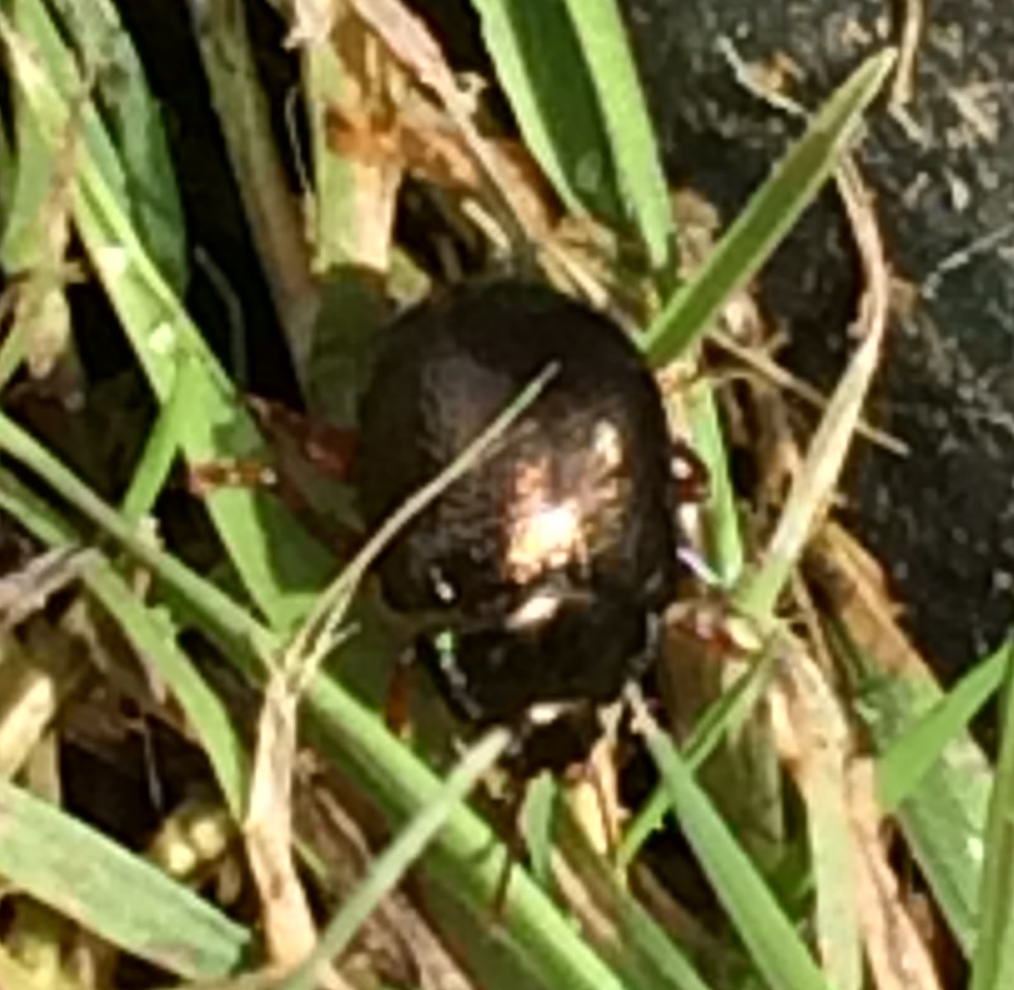
IMG_6144I went with my father to visit Tikva’s grave during our visit. It was a sunny spring day with only a few clouds in the blue sky and a small breeze. As is his tradition, my father read Goodnight Moon to his granddaughter, as he had during his visits to the hospital. As is my tradition, I brought a rose from the bush we planted with her placenta in the garden of our aunt and uncle. There was a golden beetle taking a walk around the base of her headstone, like the scarab that represented eternal life in the tombs of ancient Egyptian kings.

Of course.

****

My father told me the most beautiful story one day when I was with him. It had been a tiring day for him, but the grandchildren playing around him – my daughter and son and niece – brought light and peace. At one point we sat down together, away from the busy-ness, and he asked, “Do you want to hear a story?” His dark eyes got incredibly clear and focused and he started. It was a love story from when he was 21 years old, on his way from Greece to Israel. It was the mid-1960s and a romantic and revolutionary time to be moving to a kibbutz in Israel. He told me about a young woman he met on the ferry who lived with a disease she’d had her whole life. He didn’t remember what exactly, but it required ongoing care and blood transfusions. He saw her just a few times after they arrived in Israel, then fell out of touch.

Listening, I marveled at the clarity in my father’s eyes, which had seemed tired earlier that day. His words came easily as he told me this long and beautiful story, more easily than they come sometimes because of the Parkinson’s he courageously lives with. I wondered why this experience had come back to him then, 50 years later. He spoke about this woman, this young love, as if with some regret that he had not done more to love her for a longer time. I reminded him that he didn’t know then what he knows now, that he was only 21 years old, barely out of his teens. There was such compassion in his telling, as if now he understood what it is like to live with a disease.

I love my father more than the world. I always have. Without knowing it, he created for me from very early on my idea of the perfect man. Loyal and nurturing and dedicated and worldly and smart and soulful and handsome, so very handsome. He introduced me to westerns and science fiction, taught me history and politics and multiplication tables, brought me with him on planes to Europe, hung a basketball net above the garage for me to play with, brought me Playmobil and Legos and Kinder eggs from Europe on his business trips, took us to get donuts and sit on the roof of the car to watch fireworks on the Fourth of July, took me on a bike ride around town to teach me how to navigate using a map, helped me buy my first car. After my mother left him alone with two daughters when he was about my age, he did everything in his power to keep our lives stable. My father helped teach me what it means to love.

It’s not easy to watch your parents age. It’s hard to do so without being hit with the thought that one day they will be gone. I know many who have already lost parents. During our visit back home, my husband pointed out to the extended family how much was the same as when he was a child, except that now we fill the shoes of our parents, and they fill the shoes of their parents, and the kids… well, they are the new generation who get to be the kids. The constant throughout time is the gaggle of cousins – this time ages two to eleven – playing together and chasing each other around the house; good and abundant food; and love.

It’s the love that is eternal.
the day we met

To My Beautiful Son,

Two years ago today we met for the first time. You were two days old, and we had known about you for just one day, since the adoption agency director had come to find me the day before to tell me that a baby had been born whom she believed was meant to be our son.

Two years ago today I met your father in the hospital lobby – I was coming from work and he was coming from school. We walked into the same hospital we had walked out of together just two years before – after I delivered the twins who had stopped growing inside me – heavy with grief in spite of how hollow I felt, into the grey cold snow of Midwestern winter. In the moment we walked back in to meet you – hopeful, excited, curious, nervous – the wound from that day two years before healed more completely. Because of the gift of you.

Two years ago today we got into the elevator, arrived at the third floor and told the special care nursery receptionist that we had come to meet our son. Our beloved adoption agency director met us there too, perhaps as excited as we were after waiting and anticipating with us for a year and a half. There had been other possible babies during that time, all with some real and serious challenges we were not prepared to take on after all we and our older daughter had already been through. We knew that we could have done it, that we would be an amazing family to any child, but we recognized and honored our limitations. We knew that any adoption is complex, and that transracial adoption was something we were prepared to take on with pride, respect and responsibility for our son.

Two years ago today we walked into your warm room in the nursery and saw the tiny swaddled bundle that you were. You were so small, six weeks early and less than four pounds. But healthy and breathing on your own.

Two years ago today the nurse took you out of your warmer and placed you into my arms. You were so beautiful, so darling, so tiny, so light and so present. You looked at me with big dark eyes as if you recognized me already. Your eyes said, Are you my mother? I looked back at you and said, Are you my son?

Two years ago today a thousand thoughts ran through my mind and a thousand emotions swarmed my heart. After all the waiting for you, I asked myself, Am I ready for this? Can I do it? I looked at you thinking, Can I love you as much as you deserve? Will it be harder than if you had come from my own body?

Two years ago today I handed you to your father. Your head fit completely in the palm of his hand. You were so peaceful, already you knew you were safe, held and loved. The adoption agency director noticed your perfect ears.

Two years ago today the nurse asked us your name and when we told her, she wrote it on the white board in your room, along with our names and phone numbers. Already they were caring for us – your adoptive family – showing us that they understood that we were as much your parents as if I had been recovering from delivering you in a maternity room nearby. I think they helped me to believe it, too. To trust.

Two years ago today I looked at the agency director with tears in my eyes and said, Thank you. I told you I would be back every day to hold you and love you until you had learned to take a bottle and were ready to come home.

****

Two years ago tomorrow was the day your birth mother signed the permanent surrender of custody. I was there in the lobby of the building where I worked, the building that also housed the adoption agency. When your birth mother left after signing, I watched her from afar as she walked out the exit into the snowy parking lot. She wanted a closed adoption and didn’t know I was there. I watched her from inside the glass doors as she walked slowly to her car, as if I was looking into a snow globe, wondering about all of the emotions that must have been running through her. This woman who had made probably the hardest decision of her life and had given us the greatest gift. I promise you that I will love him with all my heart, I whispered to her from the other side of the lobby doors.

Two years ago tomorrow we got to tell your sister about you. We got to tell her that she was going to be a big sister, at last, to a healthy living baby who was going to come home. It would be two weeks before she got to meet you – children who hadn’t had a flu shot were not allowed in the special care nursery – but she was so excited she couldn’t stop laughing. She hugged me, hugged your father, hugged the agency director whom she adored, and kept laughing. She drew a picture of herself playing with her little brother; it is still hanging in the agency office. She drew pictures for you, too, and they hung next to your name and ours on the white board.

****

Two years ago our life with you began. You changed everything with your arrival. You brought more love into our family, the love we get to give and the love we get to receive. Because you are a lover of the highest order – as if you came with one mission in this life: TO LOVE AND BE LOVED.

Two years ago you brought healing. While there will always be a space in my heart from which Tikva is missing, and while you didn’t come to replace her or the twins, you bring healing every day to fill some of the empty spaces. You bring laughter and silliness and comedy already at age two. You bring the hope of all that is ahead in your wondrous life. You keep me on my toes and you make me laugh. With you it is impossible to feel heavy because you are pure joy and light.

Two years ago your story began – not just as our son but as YOU. I know that there is so much ahead that I cannot imagine, predict, know for sure. But I know that you will continue to thrive. Because what I have known about you from the moment your eyes met mine is this:

You came into this life knowing that you are held and that all is well.

And you are. And it is. And I love you completely and forever. My sweet, sweet son.

Happy birthday.

time keeps on…

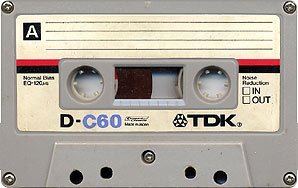
Mix Tape

Cue the Steve Miller Band on a mix tape, followed by Tracy Chapman’s Fast Car, and I am 17 again, driving across the Golden Gate Bridge in my white 1980 VW Rabbit with the baby blue vinyl seats, windows down and arm out to catch the wind.

****

Sometimes I feel like I have to be a little crazy to be parenting a toddler at my age. I’m too old for this crosses my mind daily. Too old for tantrums in the grocery store. And yet… I have a different perspective about it all this time around. I can usually remain calmer through the tantrums. I know now that 99.9% of the time there is no need to fix them. My son keeps me young, even if at 43 I am not so young.

It all makes me hyper aware of age, of aging. I’m not always sure what to make of time, the strange way it moves. How it all seems to exist all at once, in a way. I am 43 and I have an 11 year old daughter and I can also remember vividly being 11. That was the year that nasty bully made up that name he insisted on calling me well into late high school. It was also the year I met my best friend. And it was the year I had my favorite teacher, the one who taught me that, If a job’s worth doing, it’s worth doing well. I am 43 and my 71 year old father has Parkinson’s disease, and I can remember when he was 43 and the disease had just barely started to show up in his body but I still didn’t know. I am 43 and after dinner, when the kids are in bed, my husband and I talk about how we are saving for our retirement, what we want for our own future care. When I am my father’s age my daughter will be 39 and my son will be 30.

One night during my daughter’s first year of life, as I nursed her in the dark in the rocking chair, she placed her tiny hand on my arm and fell back asleep. As I looked down on her hand and my arm, a flash of future memory traveled through me like a wave. It was a split second vision but so vivid and true. In it, I was in a bed in a peaceful room and I was very old, in my nineties. She sat next to me, in a chair by the bed, and she, too, was older, in her sixties. Her hand was bigger, older, the skin around her veins thinner and more translucent, the veins themselves more pronounced, but it rested still on my arm. My daughter. At the foot of the bed there was another chair and in it sat a man. I could not see faces, but I knew these were my children.

I hope beyond hope that I make it to that moment. It has brought me comfort at times, knowing that I will live into my nineties accompanied by those I love.

****

I used to think of myself as an extremely nostalgic person. A song or a smell would set me off and I would find myself years in my past as if no time had gone by, deeply moved by the same emotions. I still time travel a lot but without longing for a moment or experience I can never get back. Any song by Journey and I am in middle school again instantly. I heard an NPR piece once about why this happens with the music from that time in our lives – that we are at our most cognitively impressionable during our adolescent years and so those end up being the songs we remain most connected to (and which can make us most nostalgic) as we age. I am 43 years old and happily married to the love of my life and Foreigner’s I Want To Know What Love Is can still bring up a twinge of pubescent longing.

As I’ve gotten older, though, I understand nostalgia differently. I think more than anything, I have always been especially aware of the movement of time; even as a child I had a sense of myself moving forward in time into my future, an understanding that the current moment was fleeting. I paid attention to my parents – to their dynamic with each other, to their moods, to their needs. I still remember the last time I noticed my parents kissing, several years before their divorce. Maybe all 11 year olds are this aware? So much imprinting into my soul during those years. Stories forming.

I was one of those kids who really liked hanging out with grownups. I found them interesting, compelling. I loved going to movies with my mother – she introduced me to James Dean, took me to R-rated films I barely understood: Fanny and Alexander, Chariots of Fire, The Hotel New Hampshire, Hair. I remember Natassja Kinski dressed in a bear costume, some man savagely doing something to his wife from behind, Treat Williams opening his mouth for a sugar cube… I was a popular kid among the parent set, precocious, intelligent, a sponge for connection. When I got bored playing with a friend at her house, I would go into the kitchen and talk to her mother. Babysitting during middle school, I would put the kids to bed and do the dishes (yes, I did the dishes), serve myself some ice cream, and then walk around the house and observe how other families lived. I’d look at the wedding photos in their frames and imagine my own marriage, my own future family. I’d look in the medicine cabinet at pill boxes and condom boxes and diaphragm boxes. Once I stumbled onto a turquoise glass bong, though I didn’t quite understand what it was. It was pretty and it smelled musty.

It moves, time. I think in a way the nostalgia transforms to a longing to have some of that time back. How did I get to 43? What happened in the last 40 years since I started retaining my memories? Or at least, what do I have to show for myself from the past, say, 20 years? What would I do differently if I could go back in time and change some things, make different choices? I was speaking with a nurse friend who is in her fifties, telling her that if I were 20 years younger I would go to nursing school. Or social work school. Or even medical school. I would take all those science classes I avoided that I am now so curious about. My friend replied, You can still do it, you know.

My daughter asked me recently, What’s the one big thing you want to do in your life? Besides motherhood? Write a book. I want to write a book.

I feel the fire under my belly now. The deep need and desire to leave my imprint; a meaningful, lasting, loving mark on the world. Time is moving faster now that I am on this side of 40, now that I am in midlife. There is so much I want to do. Confidence and a belief in myself that I have finally deeply connected to after all this time. Trust in my 43 years of life experience and the wisdom I have to share, which comes from all I have lived, from the challenges and overcomings and life lessons and adventure.

****

In Montessori classrooms, children learn in groups of three grades at a time. The classroom more closely mirrors the real world, and older children help guide the younger children while learning how to mentor and lead. I don’t think we are meant to connect only with people in our age group. I love my friends who are older than me, who are examples of how I want to move forward in my own life. I love my friends who are younger, for they teach me too. So do my children.

I hope I can teach my children well. Teach them to age gracefully, to grow confidently into themselves, to not fear or dread the passage of time. I hope they will believe me when I tell them that the wisdom that comes with time is worth every wrinkle and stretch mark and crack in their souls. I know from my own elders that out of this wisdom can come ease and grace.

I’ve been writing my book in my soul for a long time. Gathering the pieces of life that have started to form a mosaic. As my best friend since fifth grade once said, Living my life for the story it will tell. For me, at 43, nostalgia has turned into something beautiful: a desire to tell my stories aloud, to write them down into something significant. Sharing stories gives my life meaning. That is the imprint I want to leave behind.

a confluence of events

DSCN4751_2

Confluence: An act or process of merging. A coming together of people. A flowing together.

There is a confluence of events happening in our home right now. It involves three things: The Terrible Twos. Adolescence. Perimenopause. All happening at the same time, under the same roof. For the sake of his sanity, there are times when I am thankful for my husband that he works long hours outside the home.

I have done zero research about the hormonal changes that go on in a toddler as he approaches his second birthday, but I would bet money that something similar to puberty is going on there. I have vague memories of going through this nine years ago with my daughter. Since I actually remember my own unreliable moods and total annoyance with all things parental during puberty, I know for sure there are hormones involved when my 11 year old rolls her eyes at me. Since my own mother left when I was 15 and she was 38, I missed her forties and I don’t know how they were for her, or how they would have been had she been going through perimenopause with children around. Only in the last few years did I really come to understand that it is actually the decade or so leading up to menopause – perimenopause – that can be so challenging. More than a few friends and family members in their fifties and sixties have told me that once you finally get through perimenopause and actually become menopausal, things calm down hormonally and get more even again. I was by no means old when I had my daughter at 32, but if I’d had her at 22 perhaps we wouldn’t have been going through hormonal changes at the same time.

All this is a good reminder to be especially patient and understanding – compassionate – not just of my children but also of myself.

I am deeply and unapologetically merged with my children, both the adolescent I birthed and the almost two year old whose eyes I gazed into for the first time when he was two days old. They need me so much and, some days, they are determined to resist with all their might everything I try to do to help them. I know that is exactly how it’s supposed to be, that children of all ages push against boundaries as a way to stretch and learn and grow fully into themselves, and that my job is to maintain those boundaries in a consistent and calm way.

(Moment of pause to emphasize the word CALM.)

I’m pretty much 100% sure I pushed against my parents’ boundaries too. I know I argued plenty with my mother as a child. My father told me, years later, that he never understood why my mother would keep an argument going with me rather than nipping it in the bud early and saying something like, “Because I said so, end of story,” which was my father’s more common response. I think he sensed that there was only so far arguing with a child would get him.

So I recite this mantra: I will not have an argumentative relationship with my daughter. Sometimes I succeed, other times I’m less successful. Because, wow! Adolescents can sure be relentless. I understand now why my father would tell the younger me that I should become a lawyer. My daughter may physically take after her father, but I think he’s got a point when he says that, at her core, she really takes after her mother.

I need a new mantra, though. Because I will not have an argumentative relationship with my daughter is filled with triggers: The trigger of my own complicated relationship with my mother; the illusion that I can be exclusively in charge of our relationship if only I can keep my cool all of the time; the reminder of just how alike my daughter and I are. And the words in this mantra focus on  what I don’t want, not what I do want. What I strive for with both of my children is that flowing together that confluence can bring.

We are at our best when we are flowing together, and thankfully those moments are abundant too. When we I can laugh and remember not to take ourselves myself too seriously – because I am the leader, and my children look to me for guidance – we flow better together. When I take time out to breathe deeply and notice I am being triggered, we flow better together. When I am able to be as kind, gentle and patient with myself as I can be with my children, we flow better together. That’s not always easy – I think as mothers it is really easy to default to condemning and criticizing ourselves during our not-so-fine moments. But that’s when compassion towards ourselves is most important, and it’s that compassion that we can then share with our children.

After an especially emotional day recently, I told my daughter what I appreciate the most about days: That each one ends and the next morning, after a good night’s sleep and with a clear head, we get to start fresh. Every single day, for all of our lives. In our home, when we know we could have behaved better, we practice the fine art of telling each other we’re sorry. Parents included. To me, that is huge, because I know my children will grow up knowing that everybody makes mistakes, and everybody is worthy of forgiveness. I adore my children. When we are flowing together – and even at times when the crescendo in the kitchen reaches a louder and higher pitch than any of us intended – the constant that is always there, no matter what, is LOVE.


all the things that are out of my hands

When I was a child in France, the remedy for all minor scrapes and cuts was mercurochrome. The liquid, applied with a little brush like on a nail polish bottle, would leave my knee or finger candy apple red with a golden metallic sheen, and it would stop the bleeding almost immediately. It was in the medicine cabinet of every home and you could usually see mercurochrome red spots on the bodies of at least a few kids at school each day. Mercurochrome is no longer sold in the U.S., France or Germany because it contains mercury (thus the name). I didn’t know this until recently, when I looked it up to see why I’d never encountered it in the 11 years I have been a parent.

Mercury? Really? I was an active kid and I got a lot of scrapes. I vividly remember watching the bleeding stop as the mercurochrome dried on my knee. That’s at least seven years (possibly longer, as I’m pretty sure a bottle of mercurochrome made its way with the rest of our belongings when we moved from France to the U.S.) of mercury regularly making its way into my bloodstream through open cuts. Great.

I’ve never had a desire to have my levels of heavy metals measured. To be honest, I’m pretty sure I’m walking around with heavy metals in my body just as most of us are. Lead from the old paint in that gorgeous Victorian I lived in during my mid-twenties, and the gasoline in cars when I was little; mercury from mercurochrome and dental fillings and tuna salad and sushi and probably some of the vaccines from when I was little and they hadn’t changed the formula yet to avoid thimerosal. I can only imagine what the process is to eliminate these metals from our bodies – if that is even entirely possible (I’m dubious). I got my share of cavities when I was younger and those mercury fillings hung out in my molars for decades, until I had them replaced with white fillings as they began to wear and crack during my thirties. I know that’s not a benign procedure, that dentists can only do their best to keep that mercury from getting into your system as it is being removed with a drill.

Every time I take my daughter in for a cleaning, the dentist brings up coating her very back molars with a plastic resin to prevent cavities. And each time I let him know I’m not interested – that I don’t like the thought of her slowly absorbing the chemicals in plastic without knowing the possible effects. Since it’s a relatively new thing in children’s oral hygiene, they don’t yet know what they now know about mercury fillings. So I remind my daughter to spend a few extra moments on those back teeth each time she brushes.

****

When we moved to the Midwest from California in 2009, I met the head of neonatology of a major children’s hospital. We sat in his office for over an hour and I told him about Tikva, how she had been diagnosed with a congenital diaphragmatic hernia (CDH) in utero and lived for two months after she was born. CDH is less rare than many other congenital conditions, but it is less researched than it could be because few babies survive, and those that do are often too fragile to have their bodies poked and prodded any more than they need to be to support them. As I sat with the neonatologist, he told me about CDH research they were participating in with a university in Australia. The research was being done on sheep, and diaphragmatic hernia in fetuses was induced by injecting a concentrated amount of a regularly used herbicide into the amniotic fluid while the sheep were in utero.

An herbicide. A chemical that is toxic to plants and is used in gardens to destroy unwanted vegetation. Injected into the amniotic sac of a fetal sheep, it quickly induces the forming diaphragm not to form correctly, completely or at all. 

Shortly after I met the neonatologist, my husband was bemoaning the growing amount of crab grass on our front and back lawns. He wanted to spray it with some kind of weed killer and replace the crab grass with new healthy grass seed. I listened to him complain about that crab grass for the entire four years we lived in that house, but I wouldn’t let him spray. Instead, my head spun with thoughts about when my body could have unknowingly taken in enough herbicide chemicals to eventually cause my baby’s diaphragm not to form completely.

I had hoped to get a job at the children’s hospital during our time in the Midwest; give meaning to my daughter’s short life by putting my management skills to use on behalf of others like her and the medical staff who care for them. It’s probably a good thing I didn’t. Sometimes knowing too much is not helpful.

****

So what do we do with all that information? What do we do with all those lists of things that are out there, all those things that are or might be bad for us, that can harm us? What do we do with the fears they bring up? Can there be a balance between fearing everything and making the best choices we can with all the things we know and the exponentially larger number of things we don’t know?

I have no idea what caused the hole in my daughter’s diaphragm. It wasn’t the shingles I had while pregnant, the doctors assured me, because by the time I got my first blister her diaphragm had already formed. Was my body not ready to grow a healthy child because I had struggled with an auto immune condition and taken medication for almost two years until my symptoms healed just before getting pregnant?

Shortly after Tikva died I read something in the book, Healing With Whole Foods, that really angered me. Among other prohibitions to ensure successful conception and healthy pregnancy, the book instructed: Do not conceive if either partner is weak or sick. That hit me like a brick on the back of my head, and I almost threw the book across the room. I have barely picked it up since, and this is why: I think it is completely arrogant to think that we have much control over any of it. I used to think that the reason my older daughter was born so healthy is because I did “everything right” while I was pregnant with her. But I was wrong. She is radiantly healthy because that is the constitution and the spirit she brought with her into this life. Would she have been born as healthy if I had been an IV drug user while carrying her? Doubtful. But beyond not ingesting knowingly addictive and harmful drugs while pregnant, beyond eating enough good food and drinking a lot of water and getting good rest – to take care of both my unborn baby and myself – I think the rest is just random luck. Nobody warned me about avoiding deli meats while pregnant, and I spent a good month of my first trimester eating turkey sandwiches daily. I ate soft cheeses daily for five weeks as we traveled through Turkey during the second half of my pregnancy. And she turned out completely fine. (And honestly, do women really avoid sushi in Japan when they get pregnant?)

A babylost friend I met shortly after Tikva died wrote about the random shitstorm of life, and how when our babies died we were caught right in the eye of the storm. I know, now, what an incredible random miracle it is when everything goes “right” and a baby is born healthy and easily. I know more about the thousands of ways babies can die than I wish I knew, and yet there is something freeing in that: Because I am not in control. I know that for every one danger I can try to protect my children from, there are ten I cannot even imagine or predict.

I hope more than anything that my children always remain as healthy and strong as they are now. I hope they will thrive free of illness and challenges. I hope tragedy stays far away from them and those they love, and I know that about 99% of that is not in my hands. I will continue to feed them well, good and healthy food, teaching them healthy habits that I hope they will embrace as adults. I will make sure they wear a helmet when they ride a bike. I will take them for their pediatrician and dental checkups regularly. I will sign them up for softball and soccer and (gulp) even football. I will kiss their booboos and hug them when they fall, carry bandaids in my purse at all times, bring home popsicles when they get sick. I will give them their vitamins and, if they need fillings, get the white ones. I will teach them self-care and self-love. And I will love them unconditionally.

Beyond that? I’m not so sure any of the rest is in my control. And to be honest, I find that liberating. Something about knowing I am doing my best as a mother, as a human being, and that is enough.

seventy-five percent: on nourishment and fear

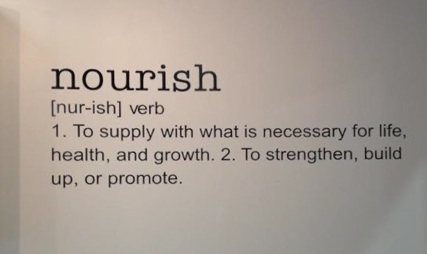
Nourish

Image source: Nourish Raleigh

Do you like kale? I mean really truly love it? Kale is one of those foods that has two staunchly opposing camps – the kale camp and the anti-kale camp – I have yet to meet someone who is neutral about kale, who could take it or leave it. You either love it or you can’t stand even the thought of it. I’m in the kale camp, but not because I totally and completely adore the taste and texture of kale in my mouth, or its bitter flavor before I drench it in salt, pepper and lemon and saute it in coconut oil. What I like about it is the color and what that dark green (or purple) tells me: I am really good for you. If it’s cooked well, I can even enjoy the chewy grittiness of it. I like the sensation of literally chewing on and swallowing iron and the other nutrients that come in dark leafy greens. And I love kale chips for the salt and pepper and crunch they are vehicles for. But would I eat as much kale if it had the nutritional value of iceberg lettuce? If the experience didn’t come with a message of nourishment? I’m not so sure.

This is the thing, though. I read recently that eating raw kale is not good for you. Raw kale can inhibit the uptake of iodine needed by the thyroid gland, which can lead to hypothyroidism. And it is high in oxalic acid, which binds with minerals in the body and makes them crystalize. These crystals can damage tissues and cause inflammation. So it’s best to cook your kale before eating it.

Okay, I can do that.

But I wonder what the raw food people would say to that. What does that mean for all those amazing “massaged kale” salad recipes out there? What does it mean for the big world of green juices and smoothies? Seems like it is impossible to win if all of a sudden a leafy green vegetable, which even my children’s mainstream pediatrician promotes, is suspect. This is the thing, and the reason I’m thinking about kale at eight o’clock in the morning:

There is always going to be something out there that’s not good for us. 

There will always be a hundred different theories about whether that thing is really bad for us, good for us or benign, and another hundred theories about why. Back in the early eighties when tofu was relatively new to the American grocery scene, pre-Whole Foods when it wasn’t in every store and instead a rare ingredient found in Asian restaurants, it became the new greatest thing, the healthier option to replace meat. At the small health food store in our town, you could find soy products in a hundred forms, but no meat. It was around the advent of soy in our home that the fried steaks and breaded filets of sole my French mom was so good at cooking disappeared and were replaced by spanakopita that was made with ground tofu instead of ricotta, and whole wheat crust instead of filo dough. I actually liked it, though it was definitely not true spanakopita like my Sephardic grandmother made.

But we know now that all that soy is actually not good for you because of the way soy mimics estrogen hormones and confuses the body. The paleo camp has soy at the top of its do not eat list for this and a dozen other reasons, and the paleo diet has in its presentation and coolness factor replaced vegetarianism and veganism as the new hot health trend. In the same way that all the “healthy people” in Hollywood used to be vegetarians, now they are paleo. Please rest assured I am pointing this out for its irony, not because I believe there is any one way for all people to be healthy. I’ve done the paleo thing and I like it for the most part, but for me it’s too much meat – I’m a 3-4 times a week carnivore, not 3-4 times a day. And I actually feel better when I eat some grains on a daily basis. And I love dairy and the goat milk yogurt I make myself is one of the most nourishing things I love most in the world, filled with good, fresh probiotics. And this: I’m not convinced that just because we’ve only been eating grains and dairy as a species for 10,000 years and before that we ate just meat, vegetables and fruits, nuts and seeds for millions of years… well, I’m not convinced that 10,000 years isn’t enough time for our bodies to adjust to consuming grains and dairy. But mostly this: I am incredibly resistant to the idea that ALL OF A PARTICULAR THING IS TOTALLY AND COMPLETELY BAD FOR ME. (Except maybe a Twinkie, but there is a big difference between a fluffy yellow thing filled with white stuff of dubious origin with a half-life of a million years and a bowl of homemade yogurt.)

It makes me want to say, Prove it! Prove it for MY body. Prove it beyond a shadow of a doubt that YOUR way will bring me complete healing and consistently radiant health. Forever.

It’s hard to keep up, and I can assure you that I have tried. But not toward a blind goal of generally wanting to feel “better” or do the “right” thing, but to address an auto immune condition in my gut that has been an on-and-off challenge for 20 years. People will ask me, Oh, you’re not eating that, is it because you’re gluten free? To which I once replied, Sort of, about 90 percent of the time. I think it helps, but I’m not 100 percent sure. It’s been literally years since I’ve eaten a sandwich so I’m not sure what would happen if I did. A sandwich. Years. The food I pretty much lived on for the entire 17 years of elementary school (when I wasn’t sent to school with a slice of tofu spanakopita), middle school and high school, and much of college – though by then I had become a vegetarian and incorporated bagels, burritos and pizza to my healthy collegiate diet.

****

At some point early in our marriage, probably around the time we had our first child, my husband and I incorporated what we call The 75% Rule. Mostly it applies to what we eat, what we clean our house with, what we clean our bodies with. It also applies to how we parent and to bigger life decisions. I think it’s a very kind and gentle approach to ourselves – guided by the idea that perfection is a trap, an endless black hole that has no end, and if we can aim for doing our best 75 percent of the time, that’s pretty great.

So it means we don’t go into debt buying the $4.00/dozen grass-fed eggs at the farmers market – because even though they are really beautiful and delicious and I wish they were in the budget, our children’s 529 college savings account takes priority. It means we make sure our meat is free of added hormones and antibiotics and splurge on the local, grass-fed stuff once in a while, and we don’t eat meat every day. It means we get some of our fruits and vegetables organic – in particular the ones that are at the top of the eat only organic list – and others non-organic, again because I prefer this to credit card debt of any kind. It means the products we clean our house with are natural, except for the bottle of bleach we keep in the cabinet for unexpected totally gross messes like the dead squirrel one of our cats dragged into the basement last week. It means we don’t spray our lawn with pesticides or chemical fertilizers but will do a non-toxic spray against mosquitoes before they return in the spring. It means we keep a frozen pizza in the freezer for babysitter nights. It means there is always chocolate in the pantry because if any camp believes chocolate is bad for me, I don’t want to know.

It means we do our best without making ourselves crazy, because I know from years of experience that making myself crazy is the #1 worst possible thing for my auto immune condition. Not to mention crazy is not good for my self-esteem or my sanity, and I value my self-esteem and sanity a great deal.

There is always going to be something out there that’s not good for us.

We can spend our lives chasing after the next great thing, the surefire solution to all of our physical ailments or challenges. We can feel constantly like we are never doing enough. And the Enough Trap is in close collaboration with the Perfection Trap in conspiring against us.

Or we can do our best, follow the good feeling that leaves room for the enjoyment of all that is out there, and remember that anything we fear – even if it’s organic, grass-fed, homemade, artisanal, all-natural – as long as we fear it, it will not nourish us. I probably would be fine if I had a sandwich like the kind I used to eat back in high school – roast beef on a French roll with tomato and mayo. I probably would love it, too. Especially with really good bread and really good roast beef and a juicy organic tomato. As long as I could let myself enjoy it fearlessly, just for the purely delicious experience of savoring something good. I’m pretty sure it would taste better than a bowl of kale.

almost

DSC_0962

I wrote something on one of my earlier blogs about lemonade. It wasn’t really about lemonade; lemonade was just a metaphor. I wrote it almost four years ago about something that happened exactly four years ago today. I wrote it about the day I birthed twins who had stopped growing, one at 10 weeks and the other at 18 weeks. So I went searching for that post today to reread it, the first time I have reread it in at least three years. I didn’t wake up aware of this strange anniversary; I realized it a few hours into my day. I realized I felt neutral about it, not triggered, not emotional. I realized that four years feels like longer. It feels far away and yet I can bring myself right back to that hospital room where drugs administered through an IV slowly convinced my hesitant, mid-pregnant body that it was time to release my babies.

A lot of hope left me that day. Hope for the promise they brought after the loss of Tikva two and a half years before. Hope for siblings for my older daughter, who had waited for so long to be a big sister. I wrote that post with both sadness and bitterness, holding a white flag of surrender.

And yet hope came back.

I can’t say exactly how or when, but it came back, slowly, over time. We chose a different path to growing our family, to bringing into our fold another child to love and hold and help to become himself. There was a point when I let go of the need for that child to come from my body, and with that release came a calm I hadn’t felt since I learned about Tikva’s condition when I was 21 weeks pregnant with her seven years ago. And here I am, four years since I delivered two almost babies who had died, with a feisty, smiley almost-two-year-old kicking soccer balls and throwing footballs to his big sister, laughing as they tackle each other on the rug.

On February 22, 2011, I wrote:

You don’t get to love the way you think you’re prepared to, but you do get to love the way you discover you can.

Somehow even then I knew I needed to understand this, or at least come to believe it. And I was right.

I wonder what life would be like if three-and-a-half-year-old twins were running around the house right now. Or if Tikva had lived, and a six-and-a-half-year-old was playing with her older sister. I think of how I wouldn’t have gotten pregnant with the twins if Tikva had lived; how we wouldn’t have adopted our son if any of them had lived.

I think a lot about parallel universes that might exist side by side with the one I exist in; other roads I was on that did not continue because my life took one detour, and then another. What it would be like if… And if those realities are perhaps still happening somewhere in time.

I’m remembering those little ones today, my almost babies who got away. How much I wanted them and loved them for the time I carried them and held them. How different it is to mother them than it is to mother my living children. How I will love them always.


courage and fear

I’ve learned a few things about myself in the past week since my January 26 post about my personal process around immunization was picked up by the Washington Post and printed in a shorter version as a Sunday Op-Ed.

I’ve learned that I am courageous. I don’t mean that in a boastful way, but I think we spend waste a lot of time doubting our own courage, keeping ourselves quiet. And we are often courageous in small and unexpected ways that are important to recognize. I’ve done plenty of that – keeping myself smaller than I know I can be.

I’ve learned that I have a voice and that I should use it. A sincere voice that speaks to more than my family and friends, but also to people I don’t know. Several older and wiser people in my life have told me that your forties are the best decade because you’ve released many of the insecurities of your previous decades, you know who you are, you have less tolerance for bullshit, and you’re not afraid to speak up. I accept their wisdom as permission to believe I know a few things and should make use of what I know.

I’ve learned that I am a peacemaker, that I take seriously the desire not to offend, not to condemn, not to alienate, not to preach. I’ve learned that I am sensitive to criticism. (Is there anybody out there who’s not?) I’ve learned that when your piece appears in the Washington Post and generates 557 comments (or comments to comments), it’s a good idea to stop reading those comments after about 50. I’ve learned that some people love a soapbox from which to speak preach rant and attack, and that it takes very little courage to do so from an anonymous ID in the comments section of a major newspaper. I’ve learned that fear (and prejudice) can sometimes lead people to be really nasty to each other.

A piece by David Brooks on Conflict and Ego in last Friday’s New York Times was helpful.

I’ve learned that it takes great courage to share a very personal story in such a public way; and that it’s much easier to criticize or dismiss someone’s personal journey, and to project your own fears, judgments and beliefs onto them. Reading what some of my commenters – critics and supporters – projected onto me when they read about my experience was shocking, in a way, and I had to remember that their words spoke more about them than they did about me. It took turning off the computer, putting down my phone and going outside to garden and play with my children to remind myself of who I truly am at my core. To remind myself of where my heart is. I don’t think I will ever read a personal essay in quite the same way again. We are capable of being so deeply moved by a piece that, in the best of circumstances, we connect and feel understood; and in the worst of circumstances, we manipulate what we read to simply prove our biases, prejudices and fears.

****

There is so much fear around this conversation about immunizations. I won’t even point out that the fear is on “both sides” of the conversation (which I think is obvious to anyone who is reading anything about it) because I think the fact that the story is being told as “this side vs. that side” is a symptom of fear. We fear what we don’t understand, and we don’t seek to understand what we fear. It can be easier to place ourselves in contrast to the other, to see ourselves on one side while “they” are on the other side. The problem with that simple equation, though, is that there are never just two sides. If you see it as a debate, it is two-sided. But I see it as a conversation, one that we are all a part of. 

In an interview with Vox last Friday, On Immunity author Eula Biss spoke to how this conversation, the responsibility we have to protect each other, involves all of us. Even those of us who are not parents making vaccine decisions for our children. She spoke about the “complicated backstories” that lead each of us to make very personal and often complicated decisions, and how in the case of vaccines our decisions go beyond ourselves. That, right there, is what I think makes this whole discussion incredibly complicated (and fascinating) – it’s messy; like debates about abortion or circumcision, the personal becomes political. But unlike abortion and circumcision, we immunize ourselves not just for our bodies but also for others.

“We live in at least, I, live and participate in a parenting culture, an upper middle class, usually white, well-educated parenting culture, that really encourages and supports fear and fearfulness. Fear is understood as a sort of intelligence in this culture. Promoting fear in another parent or mother is seen as a kind of favor. If you don’t think somebody’s feeling afraid enough, your job is to scare them. I think the other way into empathy is to look at how scared people are, and to think about why they’re scared, and what’s happening culturally to support and encourage that fear.”

That’s Eula Biss in the Vox article. I spent most of my Monday following the Washington Post Sunday publication hyper aware of my own fears. I poured out the remaining contents of a bottle of mouthwash because its neon blue color had been haunting me, as if screaming out, “I am filled with chemicals and they are getting into your body and you don’t know what they might do!” I chewed on a piece of gum my daughter gave me, then spit it out about 3 minutes later because I worried what artificial ingredients were responsible for making a piece of chewy stuff red and cinnamon flavored. I questioned whether I had sold out my belief in all things natural, beliefs I never questioned very much until recently. I don’t question those beliefs because all of a sudden I think chemicals are better for me than natural ingredients – all the cleaning and beauty products in our home (except for the blue mouthwash) are still free of that long list of offensive ingredients you see everywhere these days. But I take medication daily and weekly for my auto-immune condition; I have to prioritize what is most important in terms of organic and grass-fed when I buy groceries because I don’t make $1 million a year; I drive a 12 year old car that isn’t electric or hybrid; and I’m not going to keep my kids from eating pizza and cake at a birthday party because the cheese contains hormones and the frosting is made of partially hydrogenated oils.

I think we do what we can to make the best decisions possible – decisions that have to feel right not just in our heads but also in our hearts. We make choices based on what we know in one moment, and cannot blame ourselves later for what we didn’t know then that we do now. Sometimes our decisions change, and to me that is a good thing. One of those same elders in my life once told me when I was in my late twenties, “Consistency is overrated.” There is no medal given to the person who succeeds in holding the same beliefs their entire life. We are here to grow. Our thoughts and understandings evolve, and sometimes we surprise ourselves with where we arrive. And then when we think we’re done because we have arrived, we continue to change.

That takes courage, and courage is defined as “a quality of spirit that enables you to face danger or pain without showing fear.”

my mother, my self

DSC_0476

“You own everything that happened to you. Tell your stories. If people wanted you to write warmly about them, they should have behaved better.”    ~Anne Lamott

When I was 10 or 11 years old, my mom took me out to lunch, just the two of us, at a crunchy food court place downtown. We went often; I got beef teriyaki with green onions over rice and she got vegetable tempura or something with tofu from the Japanese place. Then we’d find a table and eat our meal.

That day, as we waited for our food, I saw another mother out with her grown son. He was probably about 20 and he had no hair. His eyes looked sad, maybe tired, and they stared off into the middle distance. I didn’t know why he had no hair, or why his mom, who was smaller than him, held his arm and helped him walk. But I wanted to know, I sensed that there was a story there and so I watched them as they ate their lunch near us. I didn’t say anything to my own mother about it until we had left the building and were waiting to cross the street. I remember exactly where we were when I did – in front of the Woolworth’s that for a while became a Long’s and which is now long gone.

“Did you see that man with no hair who was eating with his mom? Something about him felt so sad. What do you think was wrong with him? Do you think he was sick?”

My mom became noticeably tense from my words. Her face got very serious and she grasped my hand tightly. Then she looked at me and said, “Be careful. You need to keep your energy separate from others’. Don’t take in their pain, their feelings. That energy can hurt you.” There was a very real fear in her words and in the way she spoke them. I don’t remember responding.

This is one of those moments from my childhood that I remember with such clarity that it could have been just last week that I was the age my own daughter is now. I don’t remember having a longer conversation with my mom about this, but I do remember thinking deeply about what she’d said, not just that day but for years to come. As her own story as a mother unfolded, her words began to make sense in a way I hadn’t truly understood them before.

****

I’ve often thought that the story of my mother’s departure from our family just a few years later would make a great work of true-to-life fiction, but I have hesitated to write it. I remember a conversation with my husband when he was just beginning his studies to become a rabbi. We talked about how the Torah doesn’t command us to love our parents, but it does instruct us to honor and respect them. Even in the years when contact with my mother was elusive, I always had a desire to respect her need for privacy, to respect the parts of her story that were solely her own to tell (or not to tell). I still do.

But her story is also my own story. Her choices, her actions, her needs and her mistakes – they have formed me. In ways I’m not sure she really knows, my mother has shaped me – during her years of presence and her years of absence. While I am no longer the daughter whose mother left her who became such a central part of my identity during my teens and twenties – the years when I was either burying my anger and sorrow in Ben & Jerry’s or working through them in therapy – I am still and forever my mother’s daughter. So, in the words of Anne Lamott, perhaps if my mother had wanted me to write warmly about her (or not write about her at all), she should have behaved better (and not encouraged my writing since I was a child). This is probably a good time in my life to look at that story because all these years later my anger has mostly dissolved. I don’t know if warmly is the word I would use, but there is love there. Forgiveness even. A loosening of the entanglement that binds me to my mother.

****

I understand now that the words my mother spoke to me that day in front of Woolworth’s were a reflection of her own fears. Even then, several years before her need for independence pulled her from our lives, I think she may have been consciously separating herself from the heaviness she felt in the world around her. The thing is, I didn’t understand then how what she was telling me to do was even possible. Not feel the sadness around me? Not feel compassion for those in pain? Not feel incredible joy when those around me felt joy? How do you do that – not feel empathy – and why would I want to?

My mother, I also understand now, is a lot like me – highly sensitive to everything around her. But we are different, too: What I feel, what I take in because I am sensitive, doesn’t scare me. I feel like it is why I am here in this life this time around. If I’m not here to connect deeply to those around me, to everything around me, then what’s the point? Is there anything more important than connection? Is there anything more juicy, more fun, more thrilling, more real?

We are permeable, emotional and connected beings, even the most reclusive, the most aloof, the most removed among us. We can’t help it and sometimes we fight like hell against it because it can be scary to connect, terrifying to truly feel each other. We might hurt each other and we might be hurt. We might also be cracked open in the most magnificent ways.

During the years just before my mother left when I was 15, she was already beginning to withdraw, to hide out. After she left, there were many years when I allowed myself to disappear into the loss of her. Who was I without her guidance, without this woman who had so often been my best friend? Was I still her daughter? Was she still my mother? Food quickly became a comfort and I ate a lot after she left; and while I got bigger as a result, in many ways I felt smaller, more invisible inside my new larger skin. (That’s another post, though, about the ways in which we see each other differently – or don’t notice each other at all – because of size, color, age.) I hid in that new body for several years, hid from the loss of my mother, from the pain she had unleashed in me, from my anger towards her. I was absent without her presence, and so I became the daughter whose mother left her. This became my new identity.

I imagine that it wasn’t always easy for my mother to be a parent, even during the years when she was a really good mom. I know it couldn’t have been easy for her to leave, to dismantle her life and build a new one, to miss all those years in the lives of her children. But something made the separation necessary. I think she needed the space to figure out who she was. And while as a mother myself it’s hard to imagine how anyone could leave her children, because I am a mother there are days when I get it. Mothering is hard work and requires both the deepest connections and the clearest boundaries. I have yet to meet a mother who has mastered this. (If you are out there and have advice to share, please let the rest of us know.)

Maybe, though, it’s less about mastery than about compassion and gentleness – mostly towards ourselves as the nurturers, and also towards our children when our very last button – you know, the REALLY BIG RED one that reads, DO NOT PUSH THIS BUTTON OR ELSE! – is about to be pushed. We’re never going to be perfect, I’m not sure there is such a thing as the perfect mother.

I am deeply entangled with my children – in good ways, in ways that stretch me, in ways that trigger me (my daughter still has to get through middle school), in ways that create space for our relationship. There are days when it’s easy to feel like I am disappearing, as if without my children I’m not entirely sure who’s left. A few weeks ago at dinner, asserting my motherly right to sit at my usual place at the table next to my toddler son on a night when my daughter wanted to sit there instead, I heard myself saying, “I exist too! I have needs too!” My husband and children held the befuddled looks on their faces for about one tenth of a second before bursting into laughter, and about two tenths of a second later I joined them. I am at my best as a mother – as a human – when I can remember not to take myself too seriously.

****

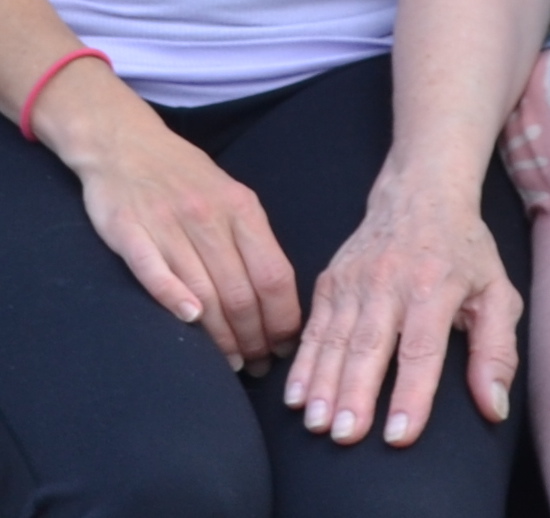
While it has loosened over the years, my mother and I are still deeply entangled. It’s been more than two decades that my voice has sounded like hers. My cheeks are hers, especially when I smile. I have her big eyes that smile along with my mouth. My hands look like her hands, especially as they age. We have had the same laugh for a very long time. I am a good mother like she was during those early years, and since some of the pain of her abandonment has dissolved, I can let myself connect with those times. I am sometimes prone to worrying like I remember her worrying, like I am sure she still does. But I am conscious that her fears are not my own, and I know how to assuage my own fears when they show up. I am no longer the daughter whose mother left her, but her leaving is forever a part of my story.

And what I became afterwards… well, that is the real story.